
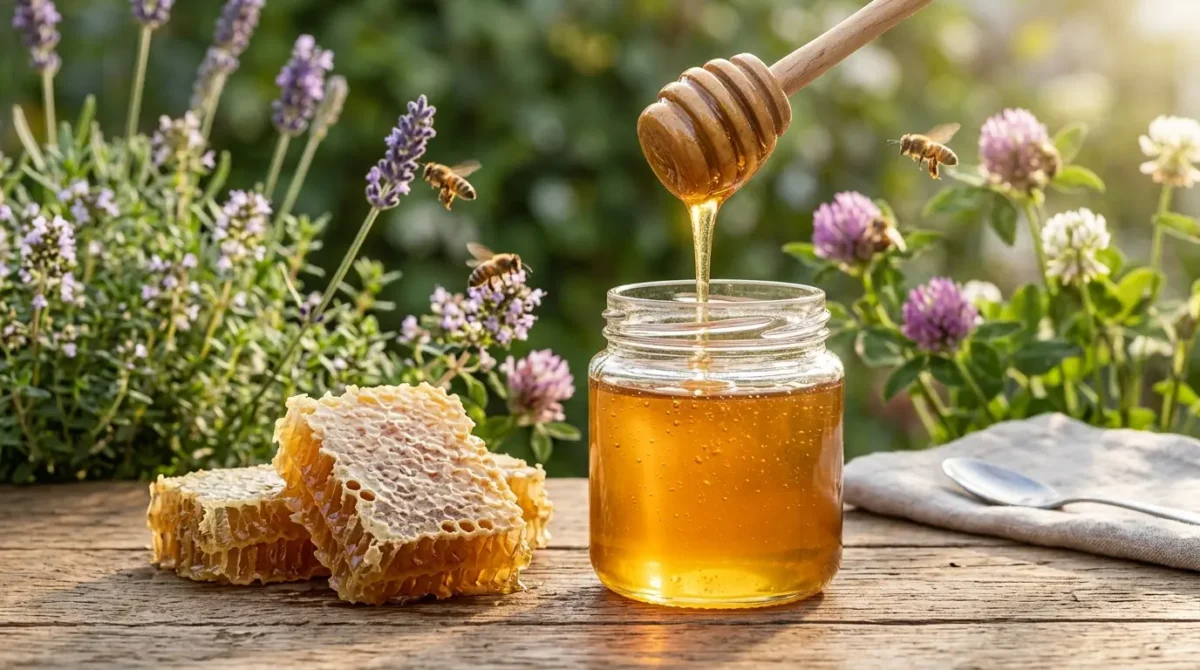
What Is Honey? How Bees Make It, What It’s Made Of, and Why It Crystallizes
Honey is a naturally sweet food produced by honeybees from flower nectar. Bees collect nectar from flowering plants, transform it through natural processes inside the hive, reduce its water content, and store the finished honey in honeycomb.
But what exactly is honey made of? How do bees turn flower nectar into honey? Why are some types of honey light while others are dark? And why does honey sometimes become crystallized?
This complete guide answers the most common questions about what honey is, how honey is made, what honey contains, and why its appearance and texture can change over time.
What Is Honey?
Honey is a sweet substance made by honeybees from nectar collected from flowers.
The bees collect nectar and bring it back to the hive, where it undergoes enzymatic changes and loses much of its water. The concentrated product is then stored in the wax cells of the honeycomb.
Honey is primarily composed of natural sugars and water, along with smaller amounts of other naturally occurring substances.
The exact characteristics of honey depend on factors such as its floral source, geographic origin, climate, and storage conditions.
The USDA Agricultural Marketing Service provides official standards for extracted honey, including classifications related to quality and color.
How Do Bees Make Honey?
Honey production starts with flower nectar.
1. Bees Collect Flower Nectar
Honeybees visit flowers and collect nectar using specialized mouthparts. Nectar is naturally rich in sugars and provides bees with an important energy source.
The flowers visited by the bees can influence the final characteristics of the honey.
This is why honey from different plants can have very different flavors, aromas, and colors.
2. Bees Bring the Nectar Back to the Hive
After collecting nectar, worker bees return to the hive.
The nectar is transferred and processed as part of the colony’s honey-making process.
During this stage, naturally occurring enzymes produced by bees contribute to changes in the nectar’s sugars and composition.
3. Bees Reduce the Water Content
Fresh flower nectar contains much more water than mature honey.
Bees help reduce the moisture content through evaporation and air movement within the hive.
As water is removed, the nectar becomes increasingly concentrated and develops the thicker consistency associated with honey.
4. Honey Is Stored in Honeycomb
The processed honey is placed inside the hexagonal cells of the honeycomb.
Bees eventually seal the cells with beeswax, creating a protected storage space for their food supply.
This is how flower nectar becomes the thick, sweet honey people use in cooking and baking.
What Is Honey Made Of?
Honey is mainly made up of fructose, glucose, and water, with smaller quantities of other sugars and naturally occurring compounds.
Depending on the variety, honey can contain:
- Fructose
- Glucose
- Water
- Other sugars
- Organic acids
- Minerals
- Amino acids
- Proteins
- Enzymes
- Aromatic compounds
The exact proportions are not identical in every jar of honey.
The USDA Agricultural Research Service provides research information on honey’s composition and the compounds that contribute to its characteristics.
What Are the Main Sugars in Honey?
The two most important sugars in honey are fructose and glucose.
Fructose contributes strongly to honey’s sweetness, while glucose plays an important role in the formation of crystals.
The relationship between these sugars helps explain why some honey remains liquid for a long time while other varieties crystallize relatively quickly.
This natural variation is one reason honey behaves differently from one variety to another.
Why Does Honey Have Different Colors?
Honey can range from almost transparent or pale yellow to amber and dark brown.
The color is strongly influenced by the floral source and other natural characteristics of the honey.
The USDA recognizes several honey color classifications, including water white, extra white, white, extra light amber, light amber, amber, and dark amber.
Therefore, color alone should not be used as a simple indicator of whether honey is better or worse.
Different varieties naturally have different colors.
Why Does Honey Taste Different?
Honey does not have one standard flavor.
Its taste can vary depending on:
- Floral source
- Geographic region
- Climate
- Growing conditions
- Harvest conditions
- Processing and storage
For example, a mild floral honey may have a delicate sweetness, while a darker variety can have a stronger, more pronounced flavor.
The plant source is particularly important because different flowers contribute different compounds to the resulting honey.
What Is Floral-Source Honey?
Floral source refers to the plants from which bees collect nectar.
Examples include:
- Clover
- Wildflowers
- Orange blossom
- Acacia
- Lavender
- Heather
- Sunflower
The dominant floral source can influence the honey’s color, aroma, flavor, and crystallization characteristics.
This is why two natural honeys can look and taste completely different.
What Is the Difference Between Runny and Set Honey?
Runny honey is honey in its liquid state.
Set honey, also called crystallized honey, has developed sugar crystals and therefore has a thicker or more solid texture.
Freshly extracted honey is generally liquid, but many varieties naturally crystallize over time.
Crystallization is a normal physical process associated with the sugars naturally present in honey.
Why Does Honey Crystallize?
Honey crystallizes when glucose forms crystals within the honey.
The process can happen faster in honey with a relatively higher proportion of glucose.
Other factors can also affect crystallization, including:
- Temperature
- Moisture content
- Floral source
- Sugar composition
- Tiny particles naturally present in honey
The USDA’s official honey standards recognize granulation or crystallization as a characteristic that can occur in honey.
Does Crystallized Honey Mean It Has Gone Bad?
No. Crystallization by itself does not mean that honey has spoiled.
Crystallized honey is simply honey that has changed texture.
It may become thick, grainy, creamy, or spreadable.
Some people actually prefer crystallized honey because of its texture.
Can Crystallized Honey Become Liquid Again?
Yes.
If you prefer liquid honey, gentle warming can soften or dissolve the crystals.
The goal should be to warm the honey gradually rather than expose it to excessive heat.
Honey can naturally crystallize again after returning to cooler storage conditions.
Does All Honey Crystallize?
Many types of honey can crystallize, but they do not all crystallize at the same speed.
Some varieties can remain liquid for a long time, while others may develop crystals relatively quickly.
The main factors include the honey’s sugar composition, particularly the balance between glucose and fructose.
Temperature and moisture also influence the process.
Is Honey a Natural Sweetener?
Honey is commonly used as a natural sweetener because it contains naturally occurring sugars and comes directly from nectar collected by bees.
It can be used in:
- Tea and coffee
- Breakfast foods
- Sauces
- Marinades
- Desserts
- Cakes
- Bread
- Salad dressings
- Smoothies
For example, honey works particularly well in baked goods. If you want to use honey in a homemade breakfast recipe, try our Banana Bread with Honey. The RecipeCrave recipe combines honey with ripe bananas, Greek yogurt, cinnamon, and vanilla for a moist homemade loaf.
How Can You Use Honey in Baking?
Honey can add sweetness and a subtle floral flavor to baked recipes.
It can be especially useful in recipes containing ingredients such as:
- Bananas
- Oats
- Cinnamon
- Nuts
- Yogurt
- Apples
- Whole grains
When using honey in baking, remember that honey is itself a source of sugar and moisture, so changing the amount can affect the texture of a recipe.
What Is Honeycomb?
Honeycomb is the wax structure built by honeybees inside the hive.
It consists of many hexagonal cells that bees use to store honey and other resources.
When honey is stored inside the comb and sealed with wax, it is protected within the hive.
The USDA also has specific standards for comb honey, including requirements concerning the honey, comb, color, and condition.
How Should Honey Be Stored?
Keep honey in a clean, tightly closed container and store it in a suitable location away from excessive heat and moisture.
Honey may naturally become cloudy or crystallized during storage.
A change in texture does not automatically indicate spoilage.
Keeping the container properly sealed can help protect the honey from moisture and unwanted contaminants.
Honey vs. Refined Sugar
Honey and refined sugar are both sweeteners, but they are produced differently.
Honey begins with nectar collected by bees and naturally contains different sugars and smaller quantities of other compounds.
Refined table sugar, on the other hand, is a processed sweetener consisting primarily of sucrose.
Both contribute sugars to the diet, so honey should not automatically be considered sugar-free simply because it is naturally produced.
Common Questions About Honey
What is honey?
Honey is a naturally sweet food produced by honeybees from flower nectar. Bees transform and concentrate the nectar before storing the finished honey in honeycomb.
What is honey made of?
Honey is primarily made of fructose, glucose, and water, along with smaller amounts of other sugars and naturally occurring compounds.
How do bees make honey?
Bees collect nectar from flowers, bring it back to the hive, transform it through natural enzymatic processes, reduce its water content, and store it in honeycomb.
Where does honey come from?
Honey comes from flower nectar collected by honeybees. Different plants can produce nectar that results in honey with different flavors, colors, and aromas.
Why does honey crystallize?
Honey crystallizes when glucose forms crystals. The rate depends on the honey’s composition, temperature, moisture, and floral source.
Is crystallized honey safe to eat?
Crystallization is a natural physical change in honey. Crystals do not automatically mean that honey has spoiled.
Why is some honey dark?
Honey naturally occurs in different colors. Floral source and other characteristics influence whether honey appears pale, amber, or dark.
Is honey a natural sweetener?
Honey is naturally produced by honeybees from flower nectar and is commonly used as a sweetener in food and beverages.
What is the difference between runny honey and set honey?
Runny honey is liquid, while set honey has developed crystals and has a thicker texture.
Key Takeaways About Honey
- Honey is made by honeybees from flower nectar.
- Bees transform nectar and reduce its water content before storing it.
- Honey is mainly composed of fructose, glucose, and water.
- Floral source influences honey’s color, flavor, and aroma.
- Honey can naturally crystallize over time.
- Crystallization does not automatically mean honey has spoiled.
- Runny and crystallized honey are different physical forms of the same natural product.
- Honey can be used in drinks, cooking, baking, sauces, and desserts.
Final Thoughts
So, what is honey?
Honey is a naturally produced food created by honeybees from flower nectar. Through nectar collection, enzymatic transformation, water removal, and storage in honeycomb, bees create a concentrated sweet food with a wide range of natural colors, flavors, and textures.
The next time you see honey become cloudy or crystallized, remember that this can be a normal part of honey’s natural behavior.
And if you’re looking for a delicious way to use honey in baking, check out our Banana Bread with Honey for an easy homemade recipe.
Sources and Further Reading
For authoritative information about honey standards, composition, and characteristics, consult:
- USDA Agricultural Marketing Service — Extracted Honey Grades and Standards
- USDA Agricultural Marketing Service — Extracted Honey Standard
- USDA Agricultural Marketing Service — Comb Honey Standards
- USDA Agricultural Research Service — Honey Research
Recommended Internal Links for RecipeCrave
Use these naturally within the article rather than creating a separate “SEO links” block:
- Banana Bread with Honey →
https://recipecrave.net/banana-bread-with-honey/ - Honey Trick Recipe → link to your relevant RecipeCrave honey-trick article.
- Honey recipes → link to your honey-related category or relevant recipe when available.
- Breakfast recipes → use a relevant RecipeCrave breakfast article where the context fits.
Important: I would not force an internal link into every paragraph. Two to four highly relevant internal links are generally more natural than dozens of repetitive links.