

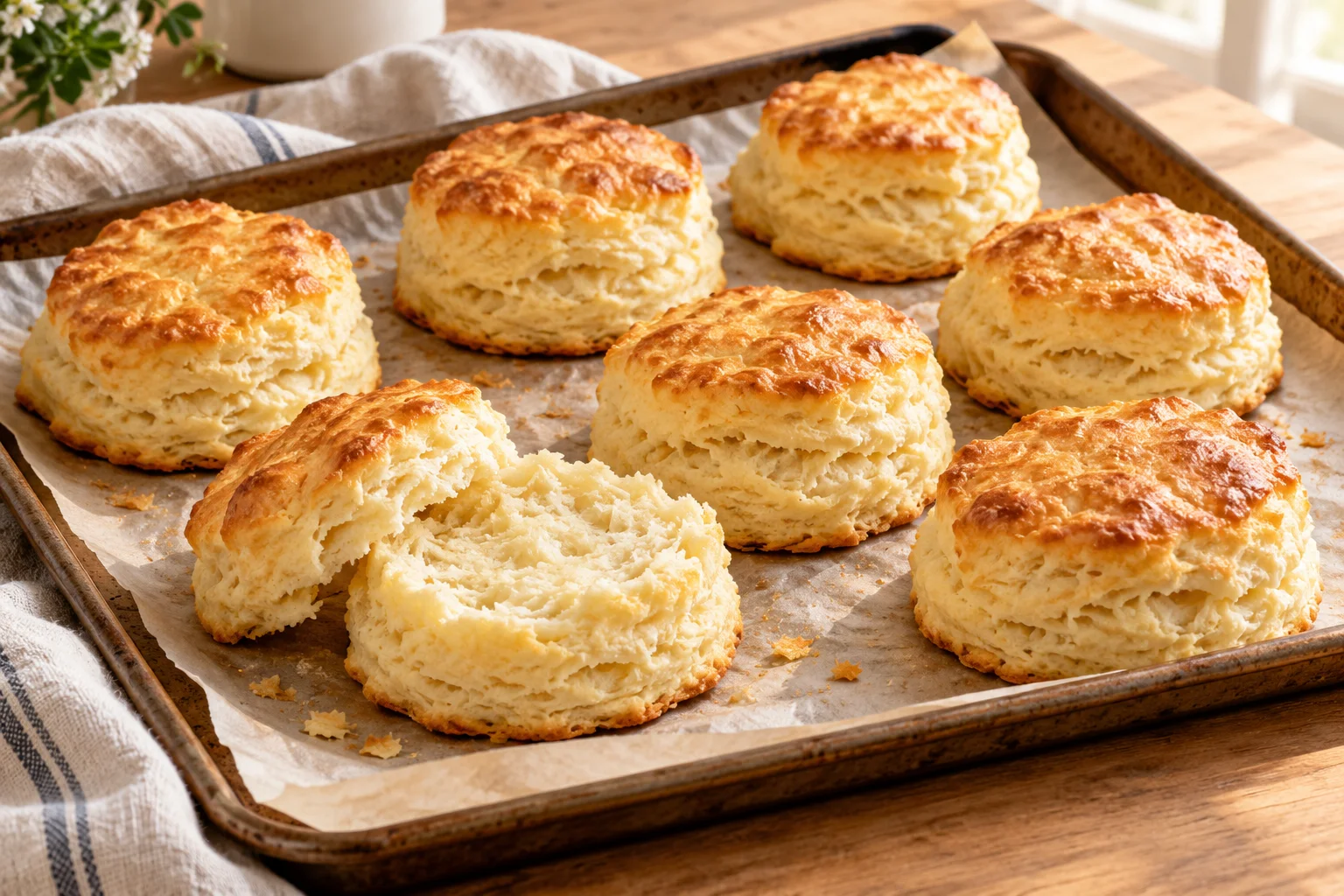
AI-generated recipe illustration.
Buttermilk biscuits are a quick bread made with flour, butter, buttermilk and chemical leavening rather than yeast. The dough goes straight from mixing and shaping to the oven, making biscuits a useful choice when you want homemade bread without a long rise.
This recipe development guide includes measured ingredients and a newly written method. Kitchen testing is pending. Allow approximately 40–45 minutes, including a short chill, and use the dough texture and signs of doneness alongside the estimated timings.
What You Need
All-purpose flour gives this dough its structure. Buttermilk adds moisture and a mild tang, while butter supplies richness. Baking powder provides lift; this formula also includes a small amount of cream of tartar.
Keep the dough butter separate from the melted butter used for finishing. The cold butter belongs in the flour mixture. Brush the melted butter over the biscuits after baking.
Buttermilk Biscuits Recipe
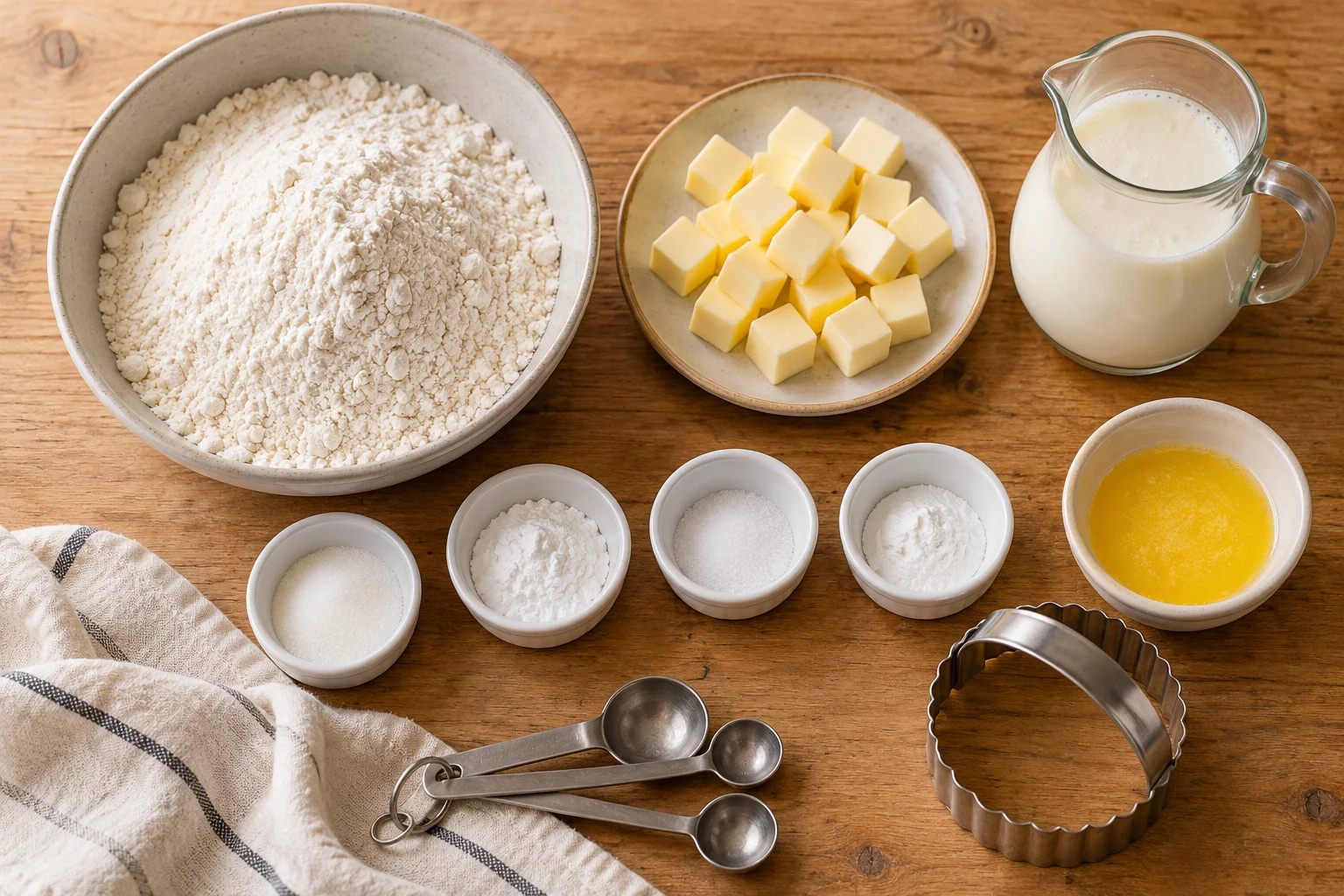
AI-generated ingredient illustration.
Buttermilk Biscuits
Ingredients
Method
- Prepare the oven and pan. Heat the oven to 425°F (220°C). Line a baking sheet with parchment rated for that temperature.
- Combine the dry ingredients. Whisk the flour, sugar, baking powder, salt and cream of tartar in a large bowl.
- Work in the cold butter. Add the butter cubes. Use a pastry blender or your fingertips to break them into smaller pieces, leaving some visible flakes. Stop if the mixture starts feeling greasy; chill it before continuing.
- Add the buttermilk. Pour in the buttermilk and stir gently with a fork until a rough, shaggy dough forms. If loose flour remains after gentle mixing, add extra buttermilk a tablespoon at a time, just until the dough holds together.
- Fold and shape. Turn the dough onto a lightly floured surface. Press it into a rectangle, fold it in thirds, then gently flatten it again. Repeat once. Pat to approximately 3/4–1 inch thick.
- Cut the biscuits. Use a roughly 2 1/2-inch cutter, pressing straight down. Gather scraps gently for another cut; avoid repeatedly kneading them. Set the biscuits on the prepared sheet with a little space between them.
- Chill briefly. Refrigerate the shaped biscuits for about 10 minutes, especially if the dough has warmed during shaping.
- Bake and finish. Bake for approximately 15–20 minutes, checking for golden tops, lightly browned bases and a center that is cooked through rather than wet or gummy. Brush with the melted butter and serve warm.
Notes
Tips for Handling Biscuit Dough
The dough should look rough before shaping. Resist adding flour until it becomes smooth and dry: use just enough on the work surface to prevent sticking. A bench scraper can help lift the dough without pulling it apart.
Keep the thickness reasonably even so the biscuits bake at a similar rate. If your cutter produces fewer, larger biscuits, expect the baking time to change. Start checking near the lower end of the range and inspect the center of one biscuit before serving the batch.
For an additional explanation of cold butter and folding in biscuit dough, see King Arthur Baking’s biscuit technique notes. That page uses a different formula; its ingredient quantities should not be combined with this recipe.
What to Serve with Buttermilk Biscuits
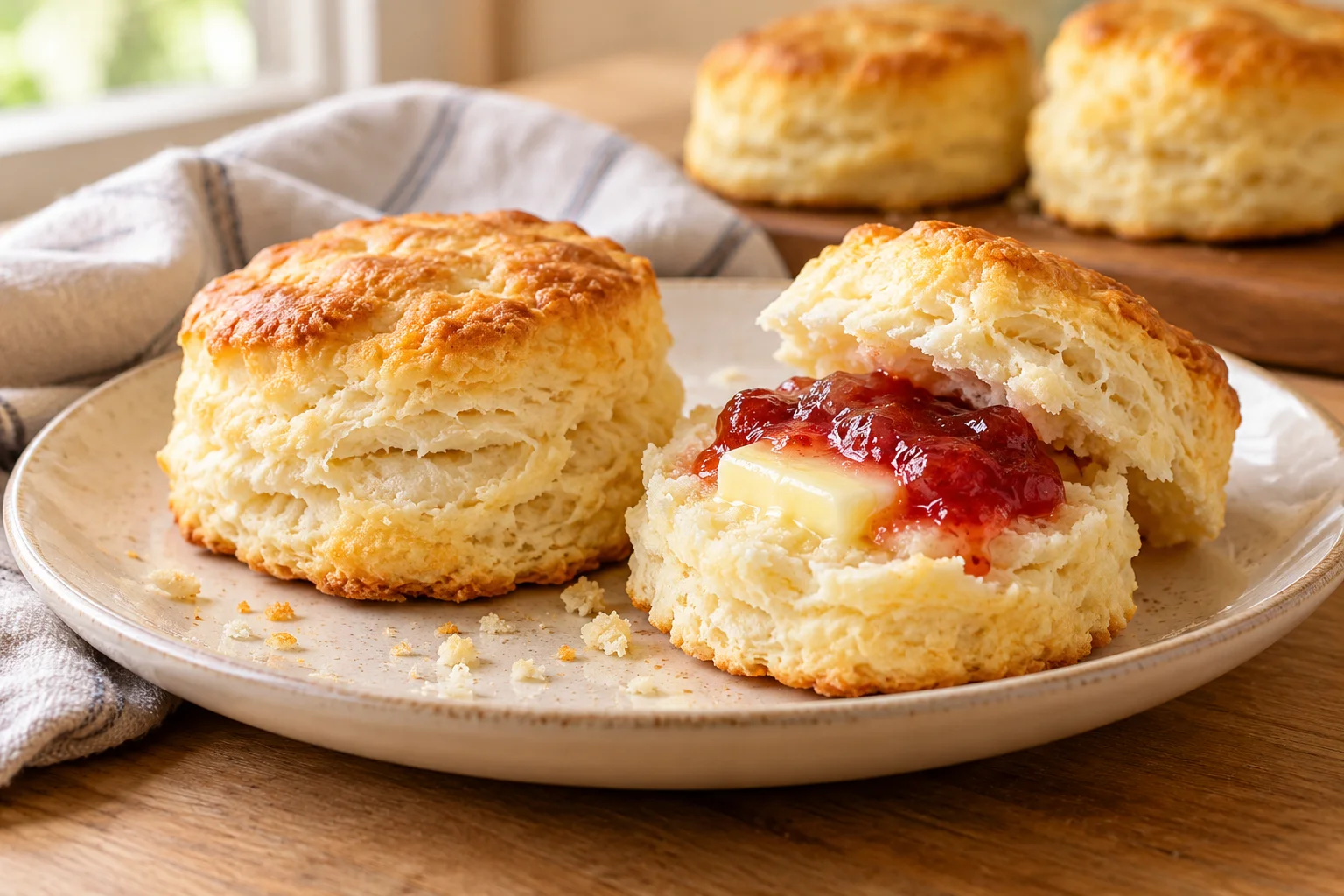
AI-generated serving illustration.
Serve warm biscuits with butter and jam for breakfast, or split them for an egg sandwich. At dinner, they can accompany soup, beans or a vegetable-rich skillet meal.
For a seasonal dinner pairing, try RecipeCrave’s one pot sausage, cabbage and potato dinner. Prepare the main dish and biscuits separately, following each recipe’s cooking instructions.
Storage and Reheating
Let plain biscuits cool before sealing them in a container. Store at room temperature for up to two days, or freeze for longer storage. Rewarm thawed biscuits in a 350°F (175°C) oven until heated through. Store perishable fillings separately in the refrigerator.
Frequently Asked Questions
Do buttermilk biscuits need yeast?
No. This formula uses baking powder rather than yeast, so there is no proofing stage. The short refrigerator rest helps keep the dough cool; it is not a rising period.
Why did my biscuits turn out dense?
Possible causes include too much flour, excessive handling, old baking powder or dough pressed too thin. Check your flour measurement and leavener, and handle the dough gently when trying another batch.
Can I use salted butter?
Yes, but reduce the added salt to account for the salt already in the butter. Brands vary, so the adjustment is approximate; unsalted butter gives more control over this draft formula.
Can I make square biscuits instead?
Yes. Shape an evenly thick rectangle and cut it into similar-sized squares with a sharp knife or bench scraper. This avoids gathering round-cutter scraps. Adjust the baking time if the pieces differ substantially in size.



Pingback: Bang Bang Chicken Pasta with Broccoli
Pingback: Homemade Pasta Sauce with Fresh Tomatoes
Pingback: Cheese Tortellini Soup with Spinach and Tomatoes