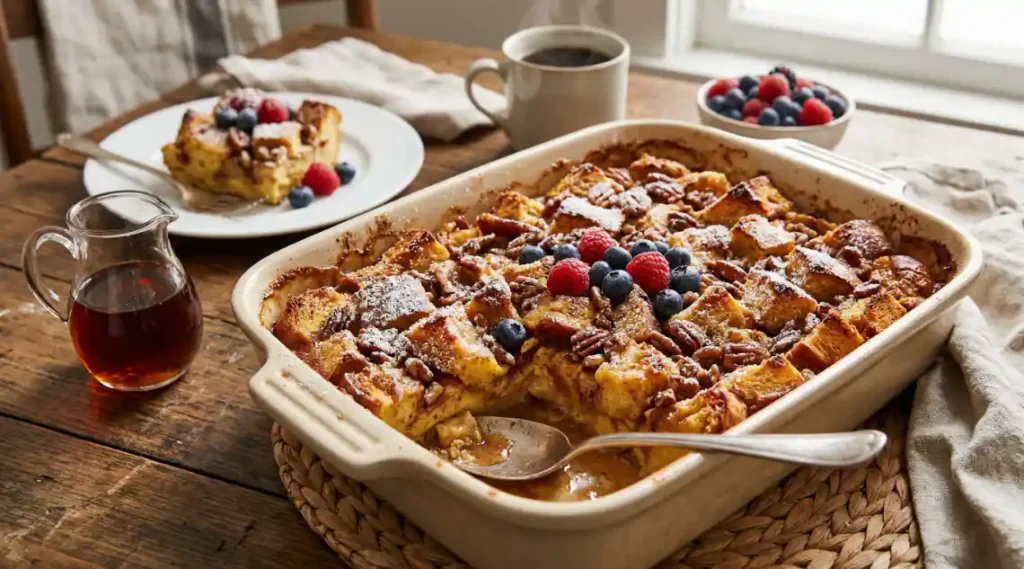
Creme Brulee French Toast Casserole: The Ultimate Overnight Recipe for a Perfect Caramelized Brunch
Summarize this blog post with: ChatGPT | Perplexity | Claude | Grok
You’ve probably made French toast before or maybe even a breakfast casserole for a crowd. But if you’re not getting that rich, caramelized, bakery-style finish, you’re missing what makes this dish unforgettable. In this guide, you’ll learn exactly how to make creme brulee French toast casserole with perfect texture, flavor, and a foolproof overnight method.
Key Takeaways
- Creme brulee French toast casserole is a baked breakfast dish that combines custard-soaked bread with a caramelized sugar base.
- Overnight preparation improves texture and flavor absorption, creating a rich, creamy interior.
- Brioche or challah bread provides the best results because it absorbs custard without falling apart.
- Caramelization techniques create a crisp, brûléed topping, adding signature texture contrast.
- Flavor variations allow customization, including berries, citrus, and chocolate.
- Make-ahead preparation simplifies hosting, reducing stress for brunch or holiday meals.
What Is Creme Brulee French Toast Casserole and How Is It Different from Regular French Toast?
Creme brulee French toast casserole is a baked breakfast dish made by soaking bread in custard and baking it over a caramelized sugar base.
First, this dish blends two classics: French toast and crème brûlée. For example, instead of pan-frying slices, you bake everything together, creating a custard-like texture with a caramel bottom layer.
Moreover, the key difference lies in the caramelized sugar layer, which mimics the crackly topping of crème brûlée. For instance, traditional French toast is soft throughout, while this casserole delivers a crispy, golden finish.
Creme brulee French toast casserole transforms a simple breakfast into a dessert-like experience.
[Internal link: “easy overnight breakfast recipes” → suggested target page/topic]
Why Is Creme Brulee French Toast Casserole Perfect for Overnight Preparation?
Overnight French toast casserole involves soaking bread in a custard mixture for several hours to improve texture and flavor absorption.
First, soaking allows the bread to fully absorb the custard. For example, recipes recommend chilling overnight to achieve a pudding-like interior instead of a dry center.
Second, make-ahead meals are increasingly popular, with over 60% of home cooks preferring prep-ahead recipes — Source: Statista, 2024. This means less stress during busy mornings.
Third, overnight prep enhances flavor depth. For instance, vanilla, cream, and sugar infuse evenly into the bread.
Make-ahead breakfast casseroles reduce morning preparation time and are ideal for serving large groups.
[Internal link: “make ahead meal prep tips” → suggested target page/topic]
What Is the Best Bread to Use for French Toast Casserole?
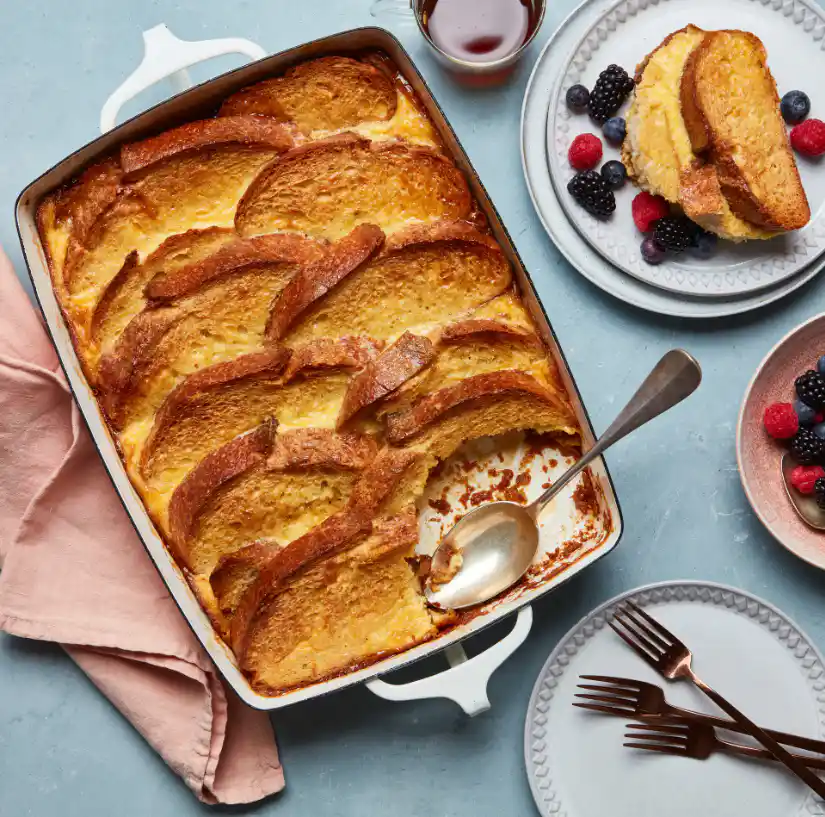
The best bread for French toast casserole is brioche or challah because it absorbs custard without becoming soggy.
First, enriched breads like brioche provide structure and flavor. For example, their buttery texture holds up well during long soaking.
Second, slightly stale bread works best. This helps absorb liquid evenly without collapsing.
Third, alternatives can still work:
- French bread (firm and neutral)
- Croissants (extra rich and flaky)
- Gluten-free bread (for dietary needs)
| Bread Type | Texture Result | Best Use Case |
|---|---|---|
| Brioche | Soft + rich | Classic recipe |
| Challah | Fluffy + sturdy | Holiday brunch |
| French bread | Firm + chewy | Budget-friendly |
Bread choice directly affects texture, absorption, and final flavor.
[Internal link: “best bread for french toast” → suggested target page/topic]
How Do You Make Creme Brulee French Toast Casserole Step by Step?
Making creme brulee French toast casserole involves preparing a caramel base, soaking bread in custard, and baking until golden.
Preparing the Caramel Base
First, the caramel base is made by melting butter and brown sugar. For example, this mixture creates a sticky, sweet layer that becomes caramelized during baking.
Moreover, adding syrup helps prevent crystallization, ensuring a smooth texture.
[Internal link: “how to make caramel sauce at home” → suggested target page/topic]
Assembling and Soaking the Casserole
Second, layering bread evenly ensures consistent texture. For instance, placing slices in a single layer prevents uneven baking.
Next, pour the custard mixture over the bread. This step ensures full coverage for proper soaking.
Finally, refrigerate overnight for best results.
Baking Instructions and Timing
Third, baking involves two stages:
- Cover and bake (retain moisture)
- Uncover and bake (create golden crust)
For example, most recipes bake for 45–60 minutes total, depending on thickness.
Two-stage baking creates a creamy interior and crisp top simultaneously.
Can You Make Creme Brulee French Toast Casserole Without Overnight Soaking?
Creme brulee French toast casserole can be made without overnight soaking, but the texture will be less rich and custardy.
First, a quick soak method works in emergencies. For example, letting bread sit for 30–60 minutes allows partial absorption.
Second, you can cube the bread to speed up soaking. This increases surface area for faster absorption.
However, skipping overnight reduces flavor depth. This means the result may be closer to traditional baked French toast.
Longer soaking produces deeper flavor and a more luxurious texture.
How Do You Get a Crispy Caramelized Topping on French Toast Casserole?
A caramelized topping is achieved by melting sugar under high heat until it forms a crisp, golden crust.
First, you can use a broiler. For example, sprinkling sugar and broiling for 2–3 minutes creates a crunchy finish.
Second, a kitchen torch delivers precise control. This helps avoid burning while achieving even caramelization.
Third, timing is critical. Overheating can burn sugar quickly.
Caramelization creates the signature crackly texture that defines crème brûlée.
[Internal link: “beginner baking tips for perfect texture” → suggested target page/topic]
What Are the Best Variations of Creme Brulee French Toast Casserole?
Creme brulee French toast casserole variations include fruit, spices, and dessert-inspired flavors to suit different occasions.
Fruity and Fresh Variations
First, adding fruit balances sweetness. For example:
- Strawberries and blueberries
- Apples with cinnamon
- Orange zest for brightness
Indulgent Dessert Variations
Second, richer options elevate the dish:
- Chocolate chips
- Caramel drizzle
- Nut toppings
Holiday and Seasonal Twists
Third, seasonal ingredients create variety. For example, pumpkin spice works well for fall brunches.
Flavor variations make this dish adaptable for any event or season.
[Internal link: “holiday breakfast recipes” → suggested target page/topic]
How Do You Store and Reheat French Toast Casserole?
French toast casserole is stored in the refrigerator for up to 3–4 days and reheated in the oven for best texture.
First, refrigeration keeps the dish fresh. For example, storing in an airtight container prevents drying.
Second, reheating in the oven maintains crispness. Microwaving can make it soggy.
Third, freezing is possible for longer storage.
Proper storage preserves both flavor and texture after baking.
[Internal link: “how to reheat casseroles properly” → suggested target page/topic]
What Tools Do You Need to Make Creme Brulee French Toast Casserole?
Making creme brulee French toast casserole requires basic kitchen tools that ensure even cooking and easy preparation.
First, essential tools include:
- Baking dish (9×13 inch)
- Mixing bowls
- Whisk
- Saucepan
Second, optional tools enhance results:
- Kitchen torch for caramel topping
- Digital thermometer for precision
[Insert image: Layered casserole before baking in glass dish | Alt text: “Prepare creme brulee french toast casserole before baking”]
Using the right tools improves consistency and presentation.
[Internal link: “baking casserole dishes guide” → suggested target page/topic]
What to Serve with Creme Brulee French Toast Casserole for Brunch?
Serving creme brulee French toast casserole with complementary sides enhances the overall brunch experience.
First, fresh fruit adds balance. For example, berries provide acidity to offset sweetness.
Second, beverages complete the meal:
- Coffee
- Tea
- Fresh juice
Third, light sides prevent overload. For instance, yogurt or eggs create balance.
Balanced pairings elevate the dish from simple to memorable.
[Internal link: “easy dessert-style breakfast recipes” → suggested target page/topic]

Easy Crème Brûlée French Toast Casserole
Ingredients
Equipment
Method
- In a saucepan, melt butter, brown sugar, and corn syrup over medium heat until smooth. Pour the mixture into the bottom of a greased baking dish.
- Arrange the bread cubes evenly over the caramel mixture in the baking dish.
- In a bowl, whisk together eggs, half-and-half, milk, vanilla, sugar, and salt until fully combined.
- Pour the custard evenly over the bread, pressing lightly to ensure all pieces are soaked.
- Cover and refrigerate overnight or for at least 4 hours to allow the bread to absorb the mixture.
- Preheat oven to 350°F (175°C). Bake uncovered for 40–45 minutes until golden brown and set.
- Let cool slightly, then invert or serve directly from the dish with the caramel side up.
Notes
What Are the Next Steps After Learning This Recipe?
The next steps involve practicing the recipe, experimenting with variations, and incorporating it into your meal planning routine.
First, try the classic version before customizing. For example, follow the exact steps once to master technique.
Second, experiment with flavors. This helps you personalize the dish.
Third, plan ahead for events. For instance, prepare it the night before a holiday brunch.
Consistency and experimentation lead to better cooking results over time.
Conclusion
Creme brulee French toast casserole is the ultimate make-ahead breakfast that combines ease, elegance, and indulgent flavor.
Ultimately, this dish allows you to impress guests without stress while delivering bakery-quality results at home. By following this guide, you can confidently create a brunch centerpiece that stands out every time.
Great recipes turn simple ingredients into unforgettable experiences.