
Candied cranberries are fresh whole cranberries coated in a thin sugar syrup, dried until tacky and rolled in granulated sugar. The result is a crisp, sweet coating around a juicy, tart berry. This batch makes about 2 cups for decorating cakes, filling a holiday snack bowl or adding a little sparkle to a dessert board.
Jump to Recipe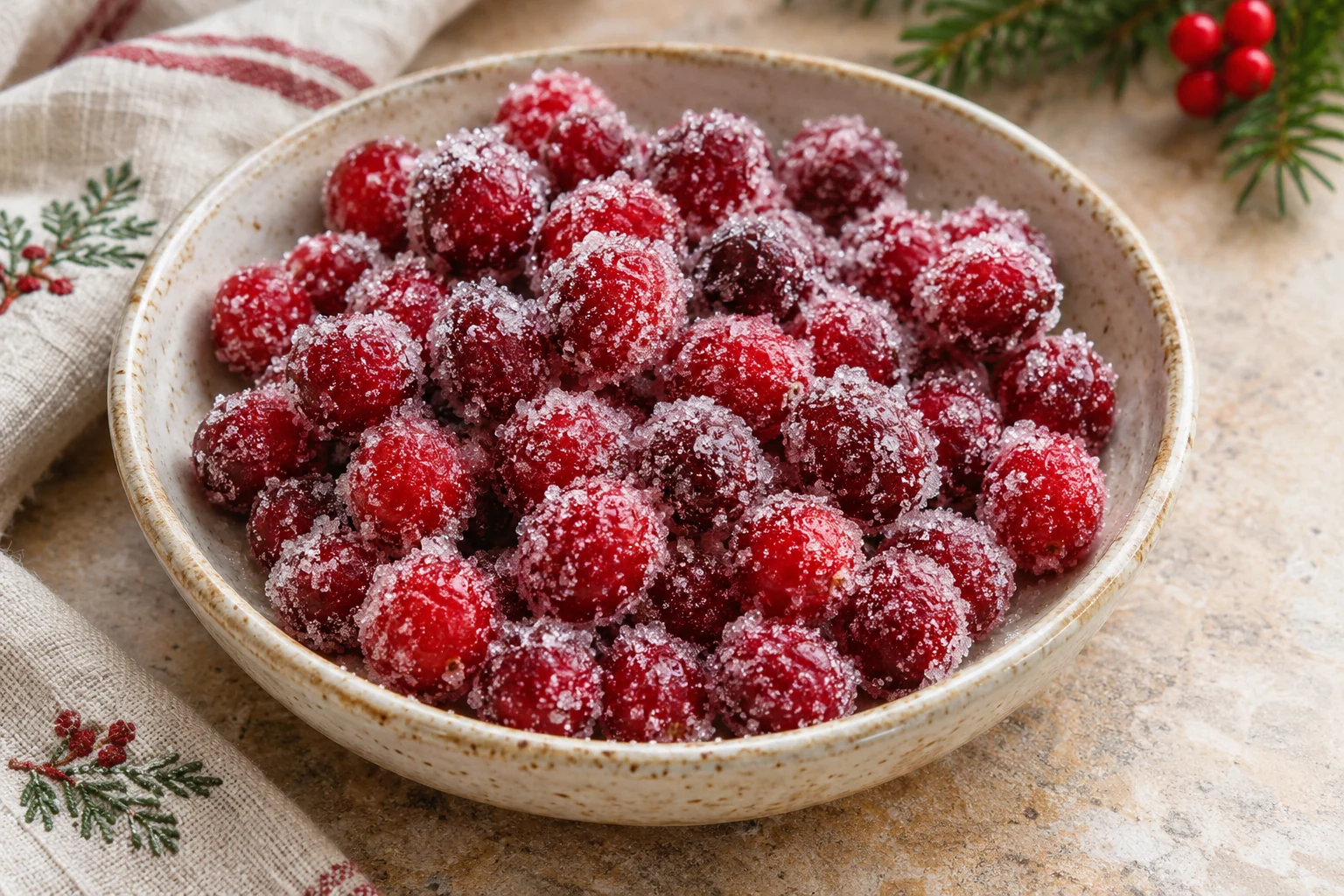
A thin syrup gives the sugar something to hold on to
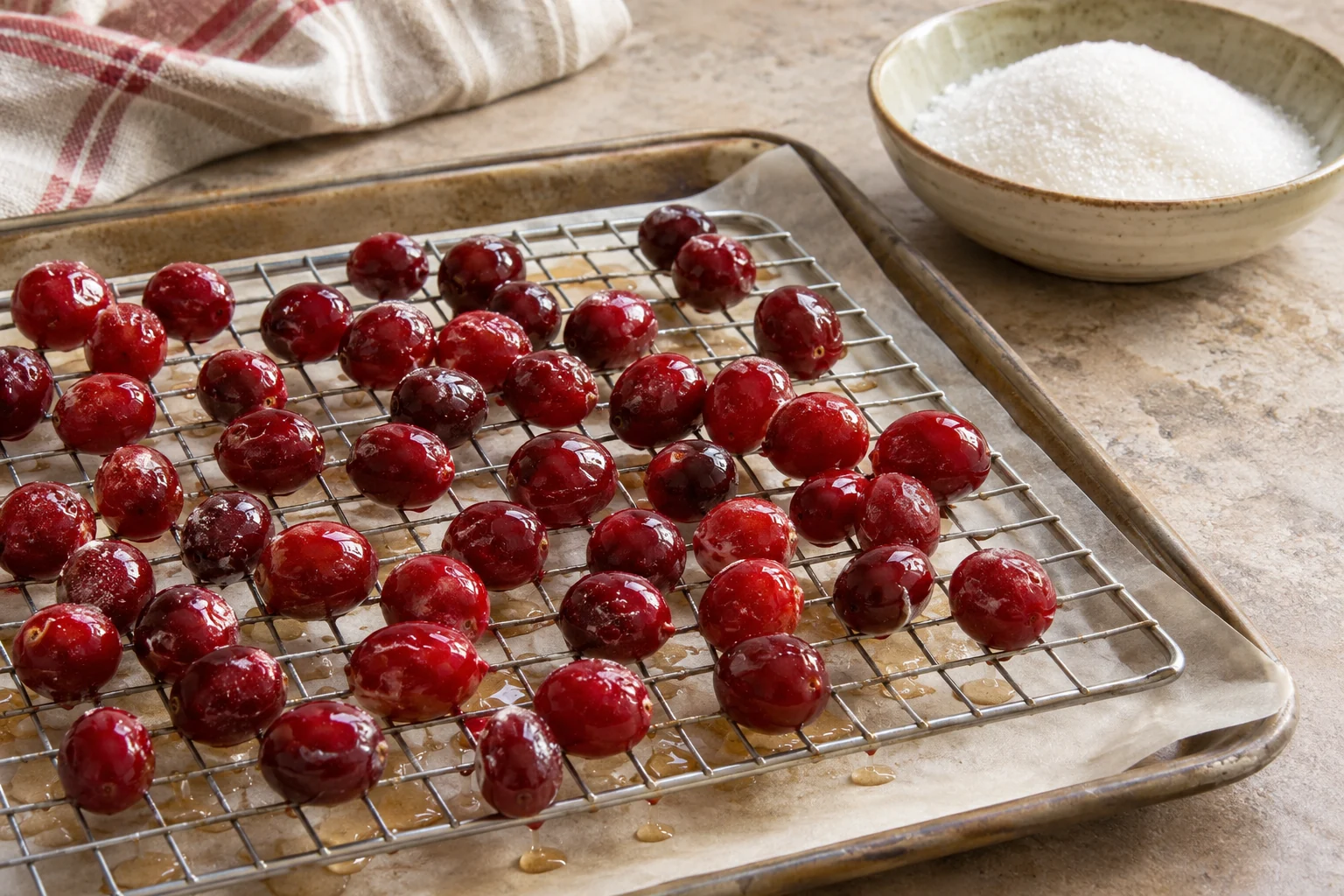
The syrup should coat each cranberry lightly. If you roll dripping berries straight into sugar, the crystals dissolve and form wet patches. Spread the coated berries on a wire rack first and let the excess drain away. They are ready for rolling when the surface feels sticky but does not leave a drop of syrup on your finger.
Use firm, unbroken fresh cranberries. Pick out soft berries, rinse the rest and dry them well before starting. Frozen berries release more moisture as they thaw, so fresh berries are the practical choice for this coating.
Which sugar should you use?
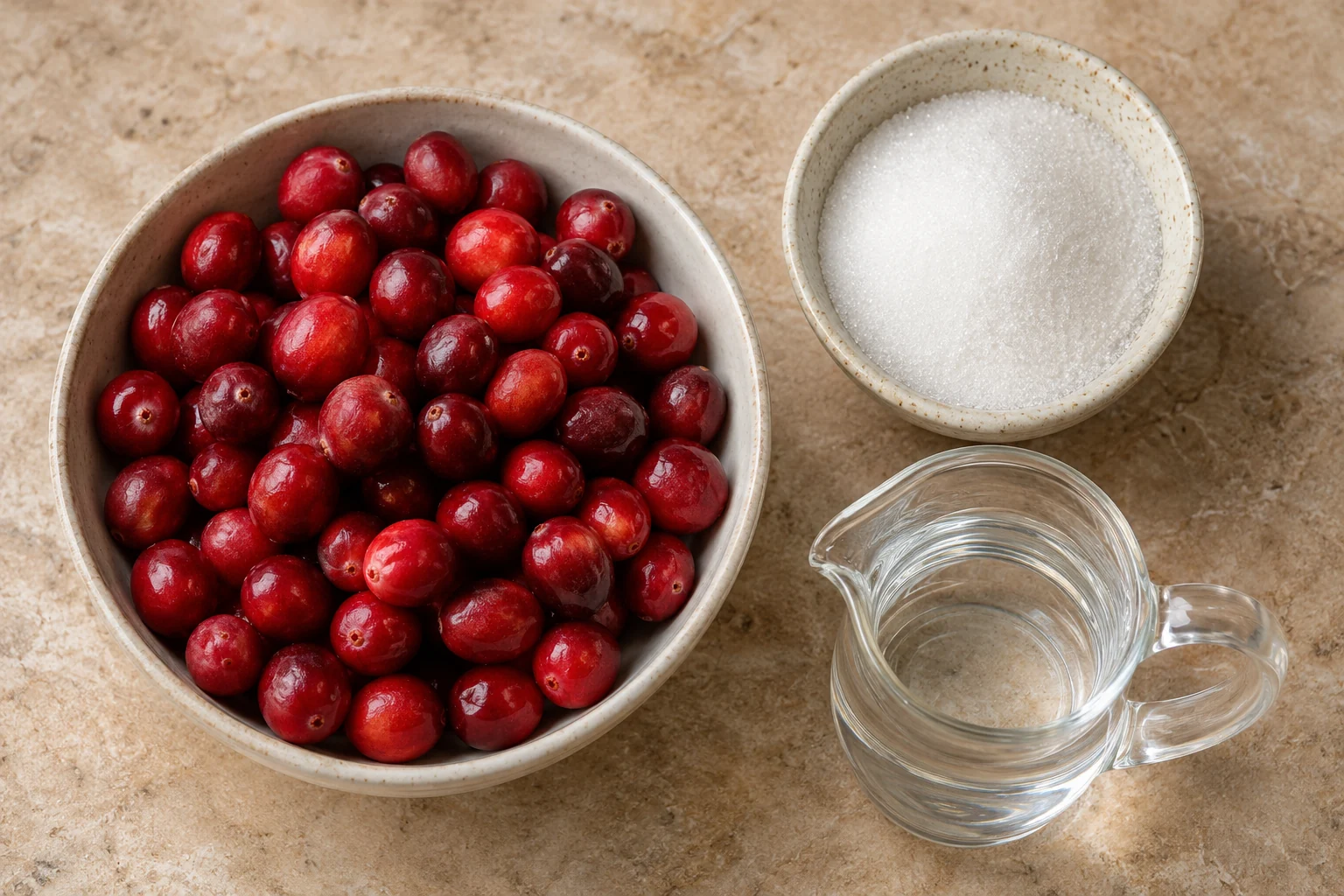
Use ordinary white granulated sugar for both the syrup and the outside coating. A medium crystal gives the berries an even sparkle and a little crunch. Very coarse decorating sugar tends to leave gaps, while powdered sugar produces a soft white finish.
Work in small batches when rolling. Put a spoonful of berries in a shallow dish of dry sugar, shake gently and lift them out with a clean slotted spoon. Replace the rolling sugar if it becomes damp or clumpy.
Make-ahead and serving ideas
For the crispest coating, finish the berries on the day you plan to serve them. You can make them one day ahead, refrigerate in a single layer once dry and let the coating dry again briefly if condensation forms. Keep them away from steam and add them to whipped cream or moist frosting close to serving.
The center remains tart, so serve a few at a time. Scatter them around a chilled pumpkin dessert, add them to a cheese board or place them beside slices of pecan pie. For a cooked cranberry condiment, try the separate small-batch cranberry orange sauce recipe.
Why did my coating turn sticky?
The berries may have gone into the sugar too wet, or the finished coating may have absorbed moisture. Let the berries sit on a clean rack until just tacky again, then roll them in fresh sugar. Handle them gently so the skin stays intact. A burst berry is better saved for a cooked sauce than returned to the candy bowl.
Candied Cranberries with a Sparkling Sugar Coating Recipe Card
Yield
About 2 cups, roughly 8 garnish-size servings
Prep
15 minutes
Cook
3 minutes
Allow extra time
About 1 hour to drain and 30 minutes to dry after rolling
Equipment Small saucepan, wire rack, rimmed tray, slotted spoon
Open the recipe video. This 20-second illustrated overview uses AI-generated images and English on-screen instructions. Follow the full method below for quantities and timing.
For the berries and syrup
- 2 cups (about 200 g) fresh cranberries
- ½ cup (100 g) granulated sugar
- ½ cup (120 ml) water
For rolling
- ½ cup (100 g) granulated sugar, plus more if needed
Method
- Sort, rinse and thoroughly dry the cranberries. Set a wire rack over a parchment-lined tray.
- Heat ½ cup sugar with the water in a small saucepan, stirring until dissolved. As soon as it comes to a gentle simmer, remove from the heat.
- Let the syrup stand for 5 minutes, then gently stir in the cranberries. Do not boil the berries in the syrup. Turn them in the liquid for about 1 minute to coat.
- Lift the cranberries onto the rack with a slotted spoon. Let drain for about 1 hour, until tacky and no longer dripping. Leave them longer if the surface is still wet.
- Place the rolling sugar in a shallow dish. Add a few cranberries at a time and toss until evenly coated. Spread on a clean tray and let dry for about 30 minutes.
Frequently asked questions
Can I eat the cranberries inside?
Yes. The fresh berry stays tart and juicy. The sugar coating balances its flavor.
Can I use leftover syrup?
Strain and refrigerate it promptly in a clean container. Use a little to sweeten a drink or brush over a cake.
Can I use less sugar?
You can roll a smaller portion of berries, but reducing the syrup sugar changes how well the coating sticks. Some rolling sugar will remain in the dish.