

Cranberry brie bites tuck a small piece of brie and a teaspoon of cranberry sauce into puff pastry cups. Bake them in a mini muffin pan until the pastry edges are deeply golden and the cheese softens into the fruit. One sheet of puff pastry makes 12 small bites for a holiday appetizer tray.
Jump to Recipe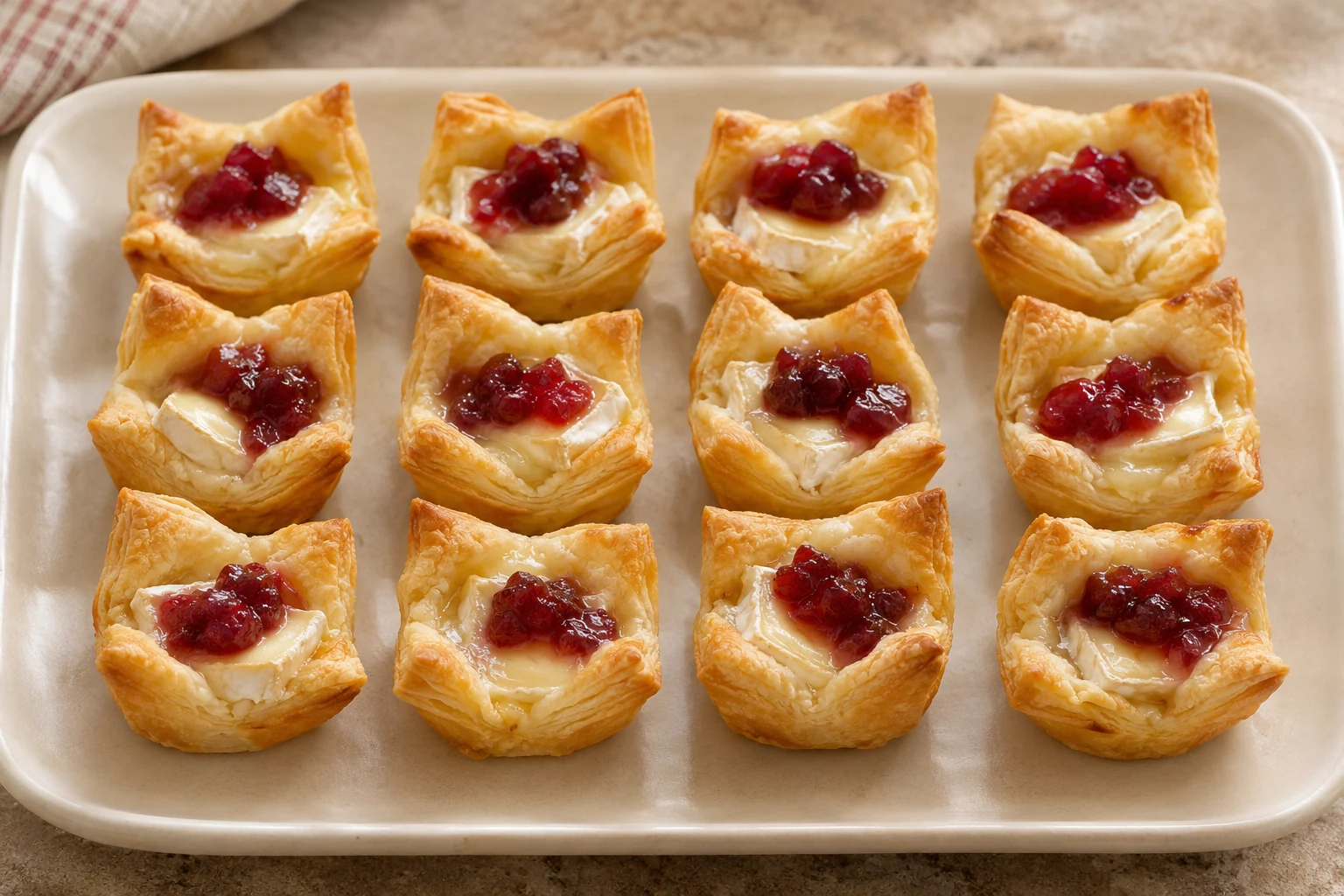
Keep the pastry cool while you work
Thaw frozen puff pastry according to the package instructions, usually in the refrigerator. It should unfold without cracking while still feeling cool and firm. If it becomes soft or sticky, slide it onto a tray and refrigerate for 10–15 minutes before cutting.
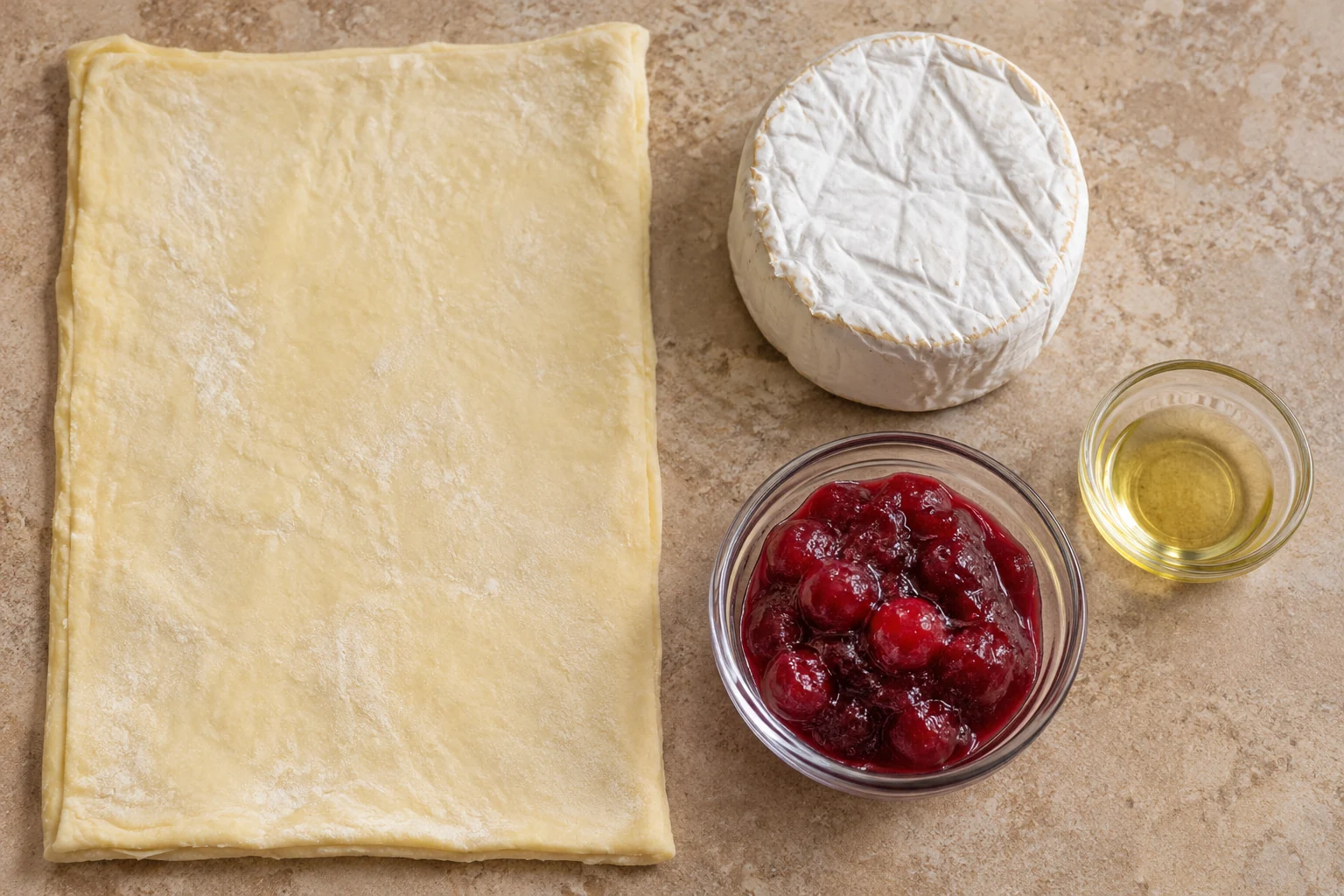
Check the sheet size before you begin. Roll it lightly on a floured counter to roughly 9 by 12 inches, then cut into twelve 3-inch squares. Thin, even squares are easier to press into the pan and leave enough room for the cheese.
Choose a thick cranberry sauce
Whole berry cranberry sauce gives the filling fruit texture, but a smooth sauce works too. Stir cold sauce before measuring. If it pours like juice, simmer it separately until spoonable and cool it completely before assembling.
Keep the brie cold while cutting it into cubes. The rind is edible and helps contain the cheese. Leave it on unless you prefer the texture without it. A small cube per pastry cup is enough, because the sauce adds volume and both fillings bubble during baking.
How to get golden pastry bottoms
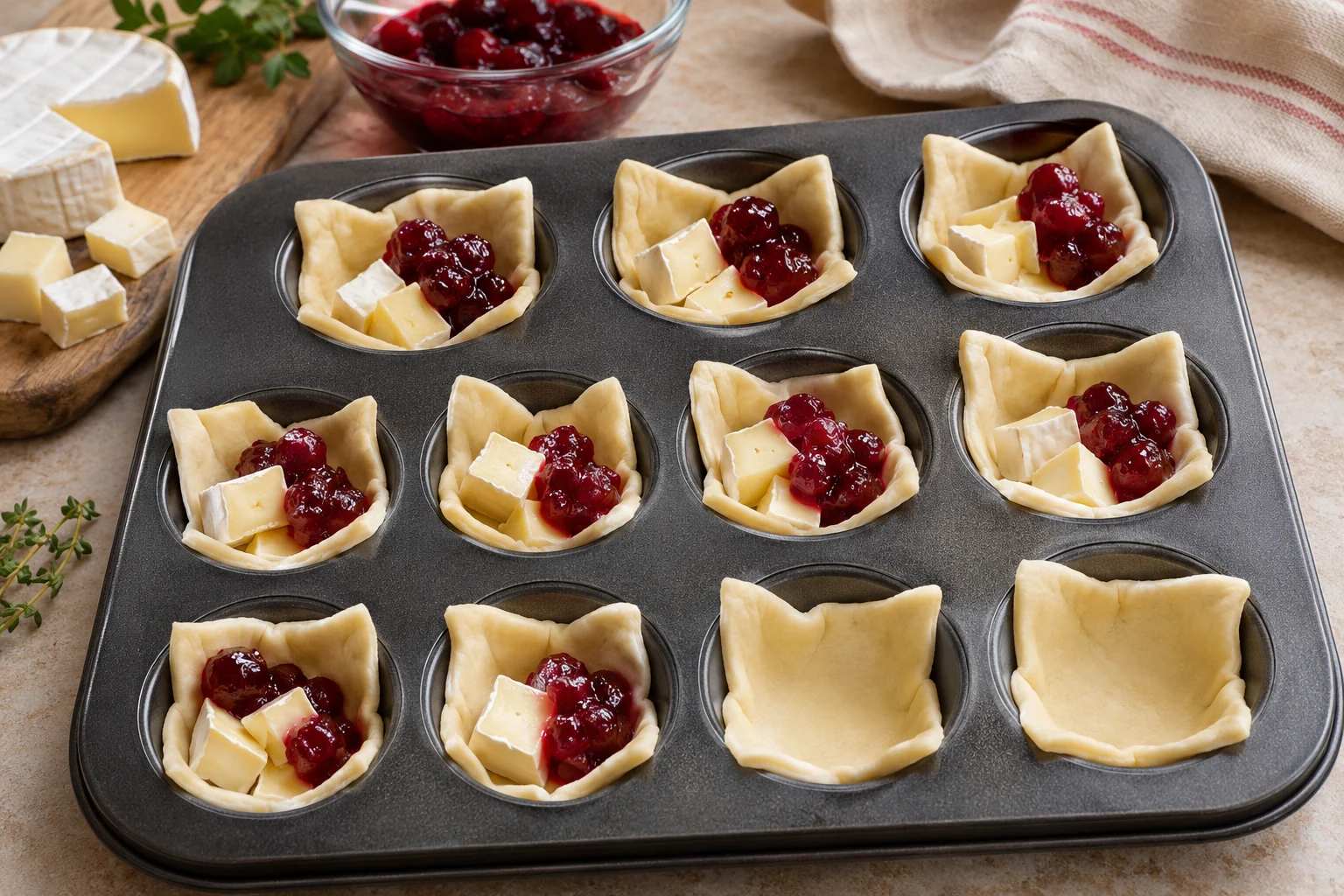
Lightly grease each well before pressing in the pastry. Ease the squares into the corners and let the tips rise above the rim. Avoid flattening every folded edge, as some open layers help the pastry expand.
Bake on the middle rack and look for well-colored sides as well as browned tips. If the tips turn golden while the lower pastry looks pale, give the bites a little longer and check in short intervals. Cool briefly in the pan before lifting them out so the hot filling can settle.
Make-ahead and serving plan
You can cut the pastry and cheese a few hours ahead. Keep the pastry covered in the refrigerator and store the cheese and cranberry sauce separately. Assemble shortly before baking so moisture has less time to soak into the dough.
Serve the bites warm on a small platter. Refrigerate leftovers within two hours and use within three to four days. Reheat refrigerated bites on a tray in a 350°F oven until hot through, checking for 165°F in the filling. The pastry may soften during storage, then crisp again around the edges.
Cranberry Brie Bites with Puff Pastry Recipe Card
Yield
12 bites
Prep
15 minutes
Cook
18–22 minutes
Allow extra time
Cool for 5 minutes, plus pastry thawing time
Equipment Mini muffin pan, rolling pin, knife
Open the recipe video. This 20-second illustrated overview uses AI-generated images and English on-screen instructions. Follow the full method below for quantities and timing.
For the bites
- 1 sheet frozen puff pastry (about 8½ ounces / 240 g), thawed but cold
- A little all-purpose flour for rolling
- Neutral oil or cooking spray for the pan
- 4 ounces (115 g) cold brie cheese, cut into 12 small pieces
- ¼ cup (about 60 g) thick whole berry cranberry sauce
Method
- Heat the oven to 400°F (205°C). Lightly grease 12 mini muffin wells.
- Unfold the cold pastry on a lightly floured surface. Roll gently to about 9 by 12 inches and cut into twelve 3-inch squares.
- Ease one pastry square into each well. Put a piece of brie in the center and top with about 1 teaspoon cranberry sauce. Leave the pastry tips exposed.
- Bake for about 18–22 minutes, until the pastry is puffed and deeply golden. Start checking at 16 minutes because pans and pastry brands vary.
- Let the bites stand in the pan for 5 minutes. Gently loosen the edges with a small offset spatula and transfer to a platter.
Frequently asked questions
Can I use crescent dough?
It has a different texture and baking behavior. This version is sized and timed for puff pastry.
Should I remove the brie rind?
You can leave it on. It is edible and softens as the cheese heats.
Can I use homemade sauce?
Yes. Cool it first and use a thick, spoonable sauce so it stays inside the pastry.
Storage and reheating guidance follows the USDA leftover storage recommendations and reheating guidance.