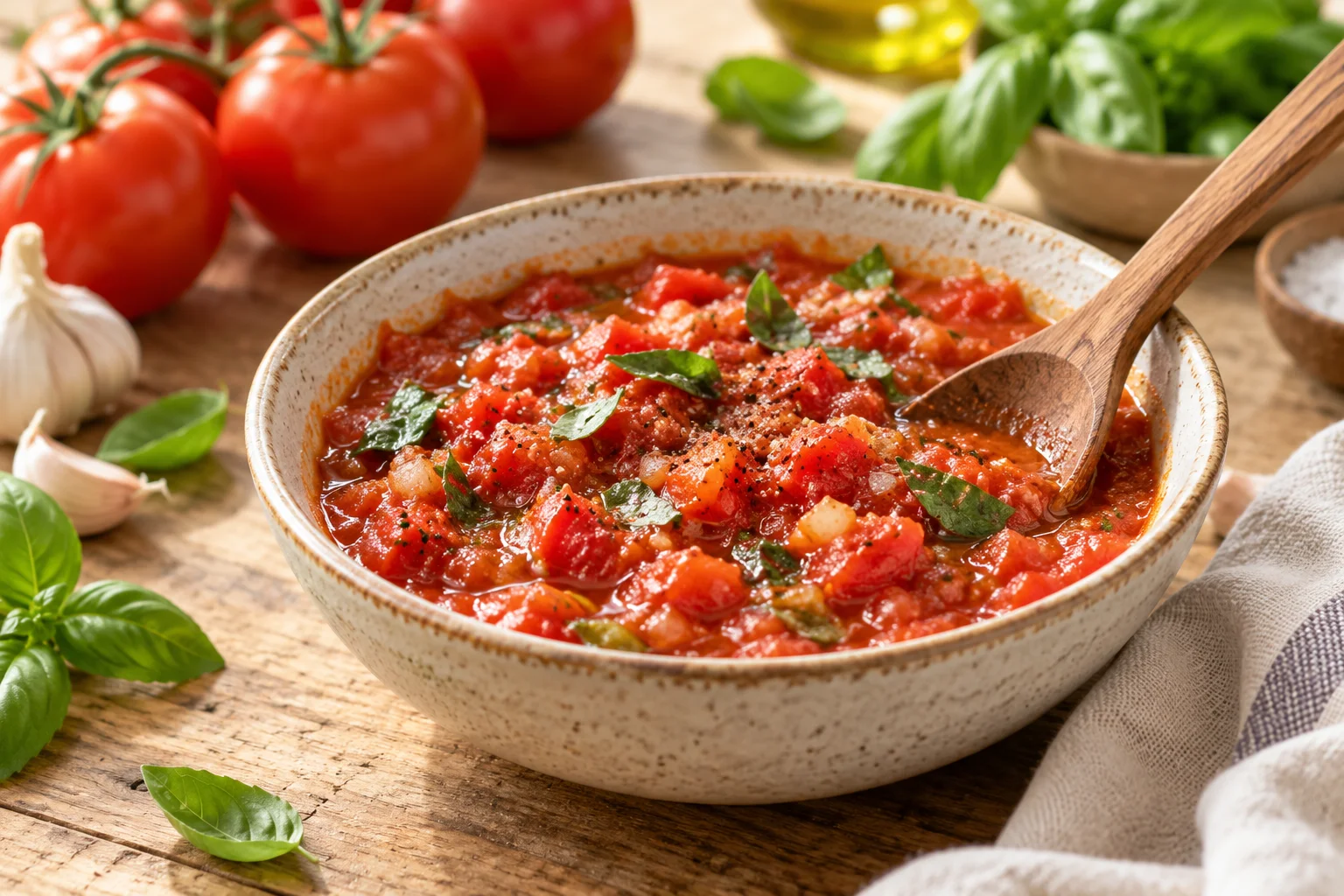
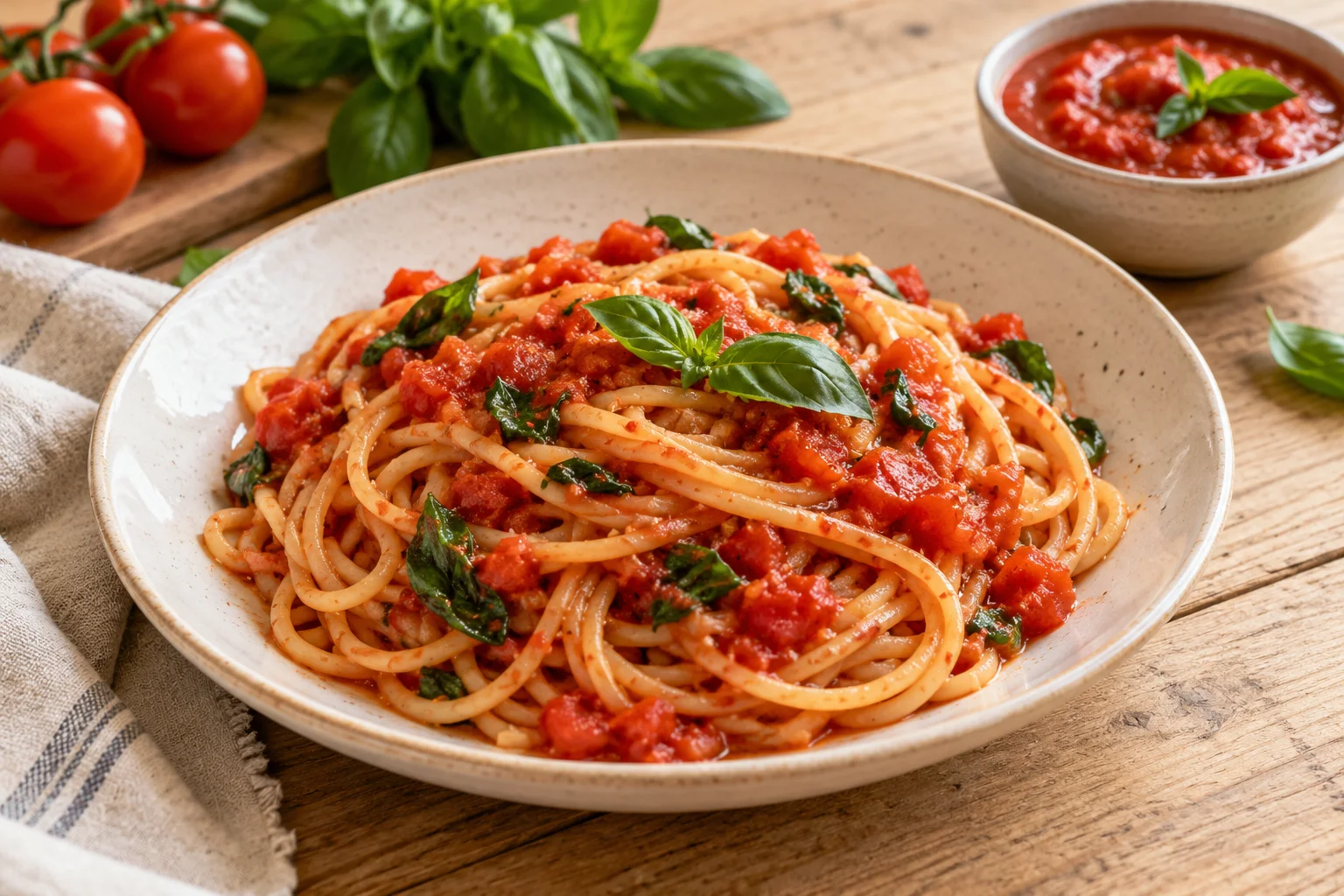
Homemade pasta sauce with fresh tomatoes is made by softening garlic in olive oil, adding chopped ripe tomatoes and simmering until the liquid reduces. Toss the finished sauce with cooked pasta, or spoon it over gnocchi. Tomato ripeness and pan width affect the cooking time, so judge the texture as well as the clock.
This is a small-batch cooking sauce, not a canning recipe. The quantities and method are a RecipeCrave development draft and have not been kitchen-tested. The estimated yield is enough sauce for about 8 ounces of dry pasta, depending on how generously you like to coat it.
Which Tomatoes Work for Pasta Sauce?
Choose ripe tomatoes with a good aroma and no spoiled areas. Plum tomatoes are convenient to chop, but a mixture of ripe varieties can work. Remove the firm stem cores before cooking. Skins can stay in a rustic sauce; if you prefer a smoother result, blend the cooked sauce rather than trying to make every tomato piece identical.
Watery tomatoes do not need a handful of extra ingredients to become sauce. Give their liquid room to evaporate in a wide pan. Keep the heat at a steady simmer and stir more frequently as the mixture thickens. A narrow saucepan usually takes longer to reach the same consistency.
Recipe
Homemade Pasta Sauce with Fresh Tomatoes
Homemade Pasta Sauce with Fresh Tomatoes
Homemade pasta sauce with fresh tomatoes is made by softening garlic in olive oil, adding chopped ripe tomatoes and simmering until the liquid reduces. Toss the finished sauce with cooked pasta, or spoon it over gnocchi. Tomato ripeness and pan width affect the cooking time, so judge the texture as well as the clock.
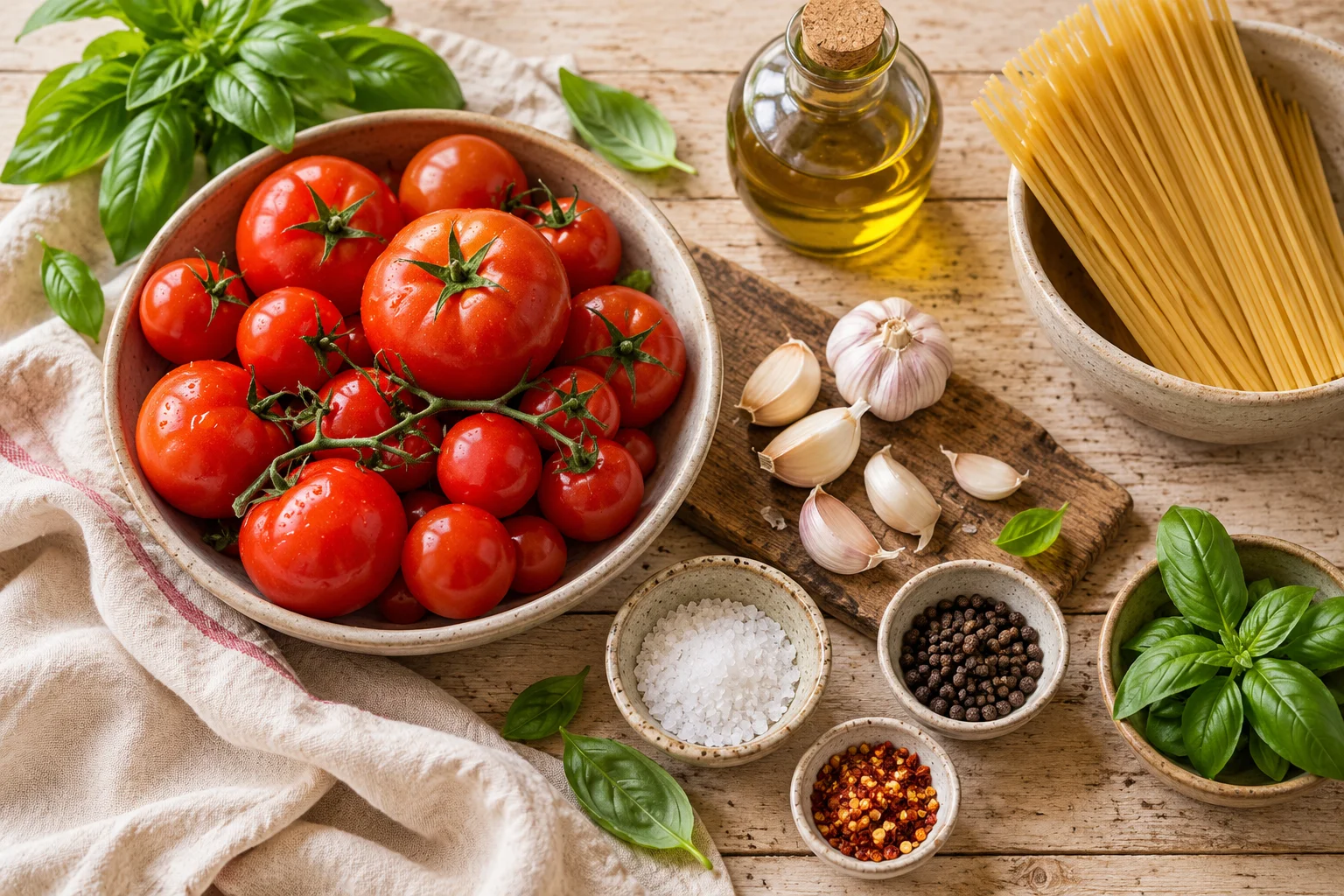
8ouncesdry spaghetti or short pastaoptional for serving
1/2cupreserved pasta cooking waterup to this amount; add only as needed
Method
Prepare the tomatoes and basil. If serving pasta, bring a separate pot of water to a boil and follow the pasta package directions.
Put the olive oil and garlic in a wide skillet over medium-low heat. Cook for about 1–2 minutes, stirring, until fragrant. Avoid browning the garlic deeply.
Add the tomatoes, salt, black pepper and optional crushed red pepper. Raise the heat until the tomatoes begin bubbling, then reduce to a steady simmer.
Simmer uncovered for approximately 20–25 minutes, stirring periodically, until the tomatoes soften and the sauce is no longer watery. Break down larger pieces with a spoon. The time can vary with tomato moisture and pan size.
Taste the sauce and adjust the salt if needed. Stir in the basil after taking the pan off the heat. For a smoother texture, cool briefly and use an immersion blender according to its safety instructions.
Reserve some pasta water before draining the pasta. Toss the cooked pasta with the sauce, adding the water a tablespoon at a time only if the coating seems too thick. Serve promptly.
Notes
Recipe development draft; quantities, yield and times have not been kitchen-tested by RecipeCrave. Times are estimates. Images are AI-generated illustrations. Estimated yield: about 2 cups sauce, enough for 4 modest servings with 8 oz dry pasta. This is a refrigerated cooking sauce, not a canning recipe.
How Thick Should Fresh Tomato Sauce Be?
The sauce should coat a spoon while still moving easily around the pan. It does not need to look as dense as tomato paste. If a watery layer collects around the chopped tomatoes, continue simmering before adding the pasta.
If the sauce becomes too concentrated, loosen it with a small splash of water. Do this gradually: it is easier to add another spoonful than to reduce a pan that has been diluted too much. Taste again after making a significant adjustment.
Avoid adding sugar automatically. First taste the finished sauce, because cooking and evaporation change its flavor. A tomato that tastes unpleasantly sour at the start may still produce a sauce you enjoy; sugar changes sweetness but does not replace a flavorful tomato.
Fresh Tomato Sauce Versus Canned Spaghetti Sauce
Fresh tomatoes offer a way to use ripe produce and control the seasoning yourself. Prepared canned or jarred spaghetti sauce is a convenient alternative when time or tomato quality is limited. Check its label before adding salt, herbs or chili because those ingredients may already be present.
Plain canned tomatoes are a different ingredient from prepared spaghetti sauce. For a pantry variation of this recipe, use an approximately 14–15-ounce can of plain crushed tomatoes, then adjust the simmering time and seasoning. Treat this as a variation rather than an exact fresh-to-canned flavor match.
Pasta and Gnocchi Pairings
Spaghetti works with a relatively smooth finish, while penne or rigatoni can hold a chunkier sauce. For a simple gnocchi sauce, prepare the sauce first and cook the gnocchi according to its package. Fold the tender gnocchi into the skillet gently so it keeps its shape.
You can also spoon this sauce over cooked elbow macaroni. Readers looking for macaroni and tomatoes should know that this produces a coated pasta dish; it is not presented as a traditional, brothier Southern macaroni-and-tomatoes recipe.
Divide leftovers into shallow containers and refrigerate promptly. Keep the refrigerator at 40°F (4°C) or below and use the refrigerated sauce or sauced pasta within 3–4 days. For safe reheating, follow the USDA guidance for cooked leftovers. This cooking sauce is not shelf-stable and must not be stored in an unrefrigerated jar.
Homemade Pasta Sauce with Fresh Tomatoes
Frequently Asked Questions
Do I have to peel fresh tomatoes for pasta sauce?
No. Leave the skins in for a rustic texture, or blend the cooked sauce if you prefer it smoother. Peeling is a texture choice for this recipe, not a requirement for the sauce to cook.
Why is my tomato sauce watery?
The tomatoes may contain more liquid than expected, or the pan may be too narrow for quick evaporation. Simmer uncovered and stir regularly, especially as the liquid level falls.
Can I use dried basil instead of fresh basil?
Yes. Start with about 1 teaspoon dried basil and add it with the tomatoes. Taste before adding more. Dried basil and fresh basil have different aromas, so the result will not be identical.
Can I double the sauce?
Yes, but use a larger, wide pan or divide the batch between two pans. Doubling the ingredients does not mean the sauce will reduce in the same time in the original skillet.
Elena Arzak Diaz is the voice behind RecipeCrave, sharing easy recipe ideas, cozy bakes and practical kitchen guides. Explore the recipe collections for everyday dinners, cookies, desserts and breakfast inspiration.