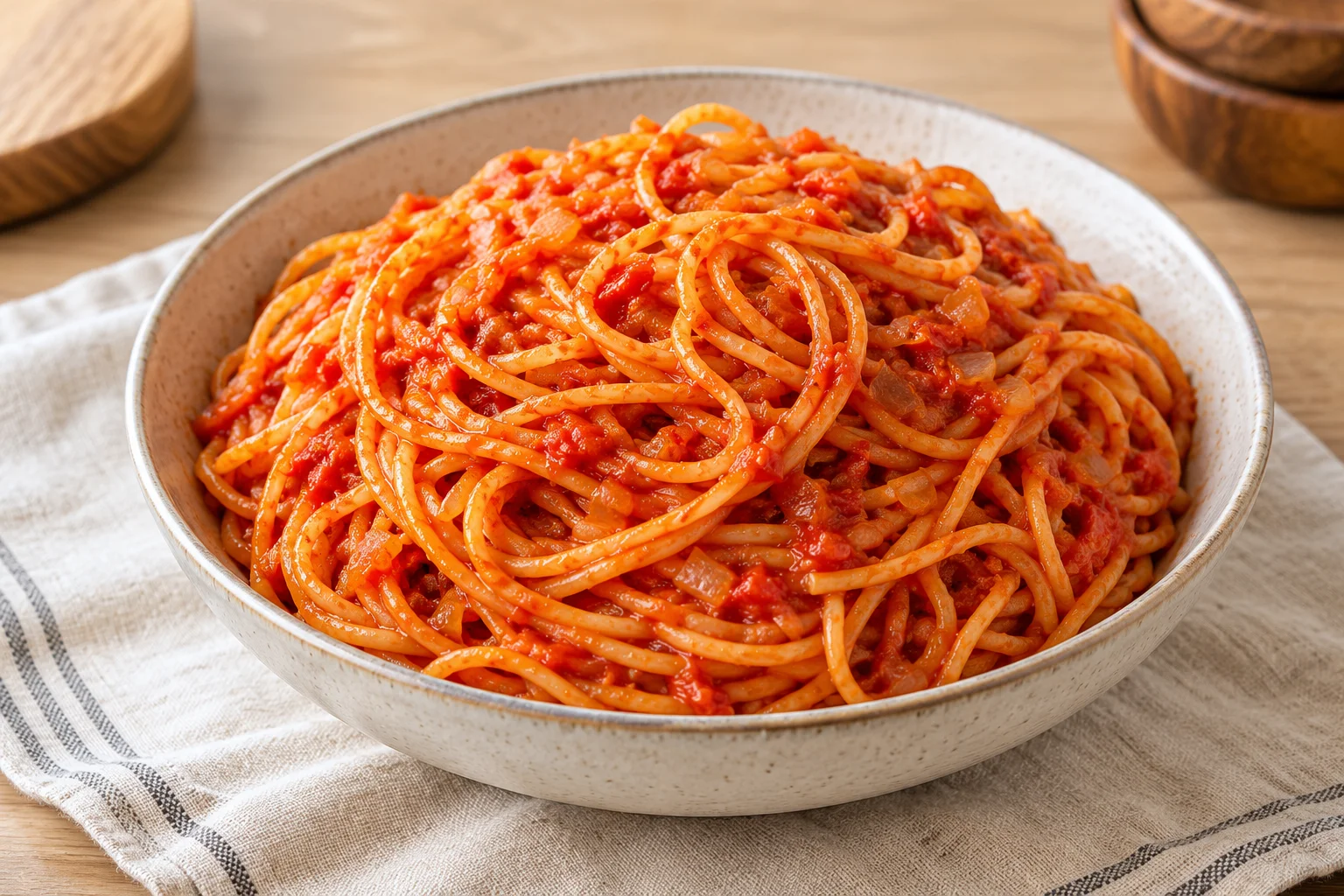
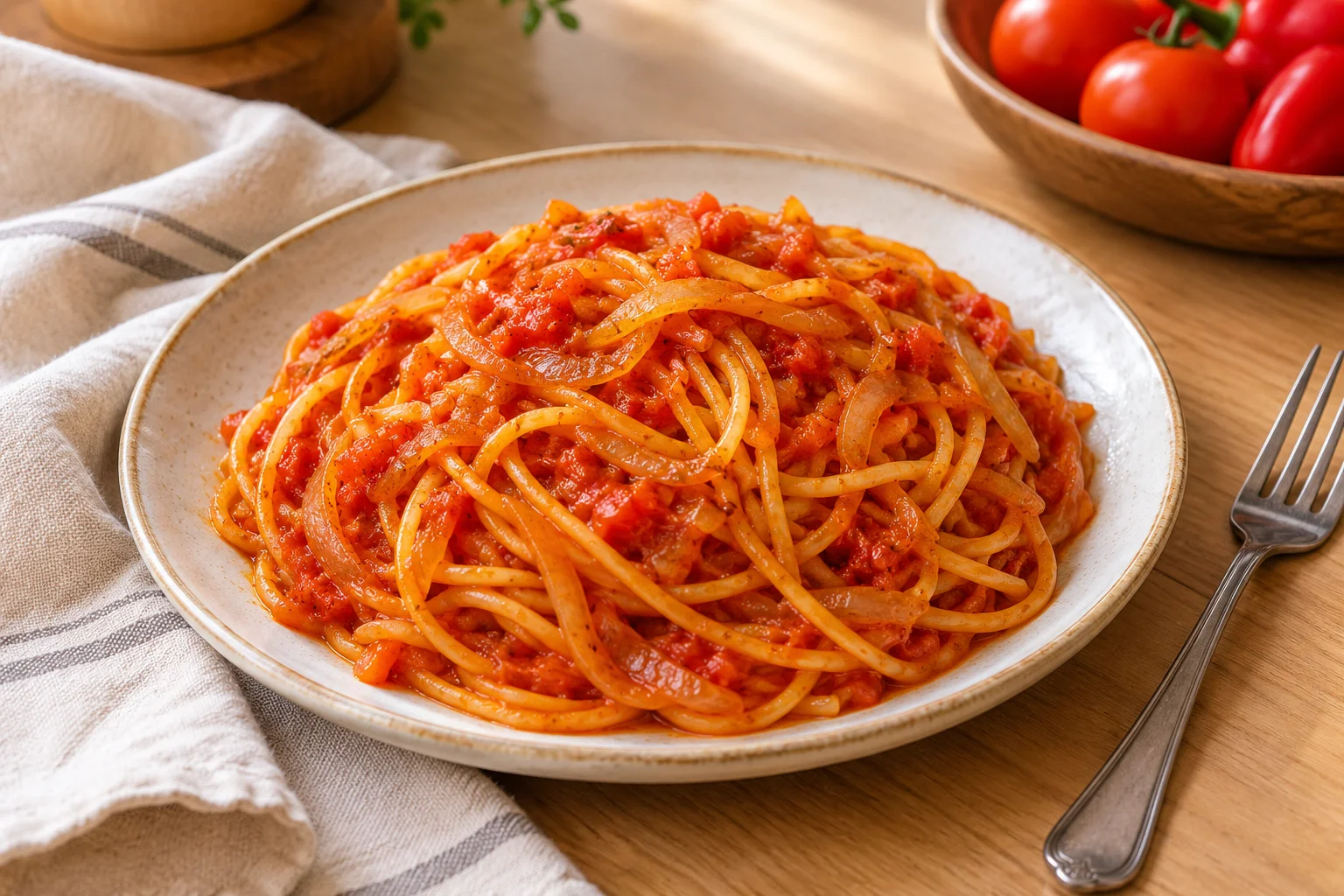
Jollof spaghetti pairs spaghetti with a seasoned tomato-and-pepper sauce associated with Nigerian home cooking. This adaptation cooks the pasta separately and then tosses it with a reduced sauce. It gives you control over the spaghetti’s texture without having to calculate how much liquid raw pasta will absorb in the sauce.
Jollof spaghetti belongs in a different culinary group from Italian pasta recipes, even though both use pasta. This version is described as Nigerian-inspired rather than as the definitive traditional formula. It is a RecipeCrave development draft and has not been kitchen-tested.
What Gives This Version Its Flavor?
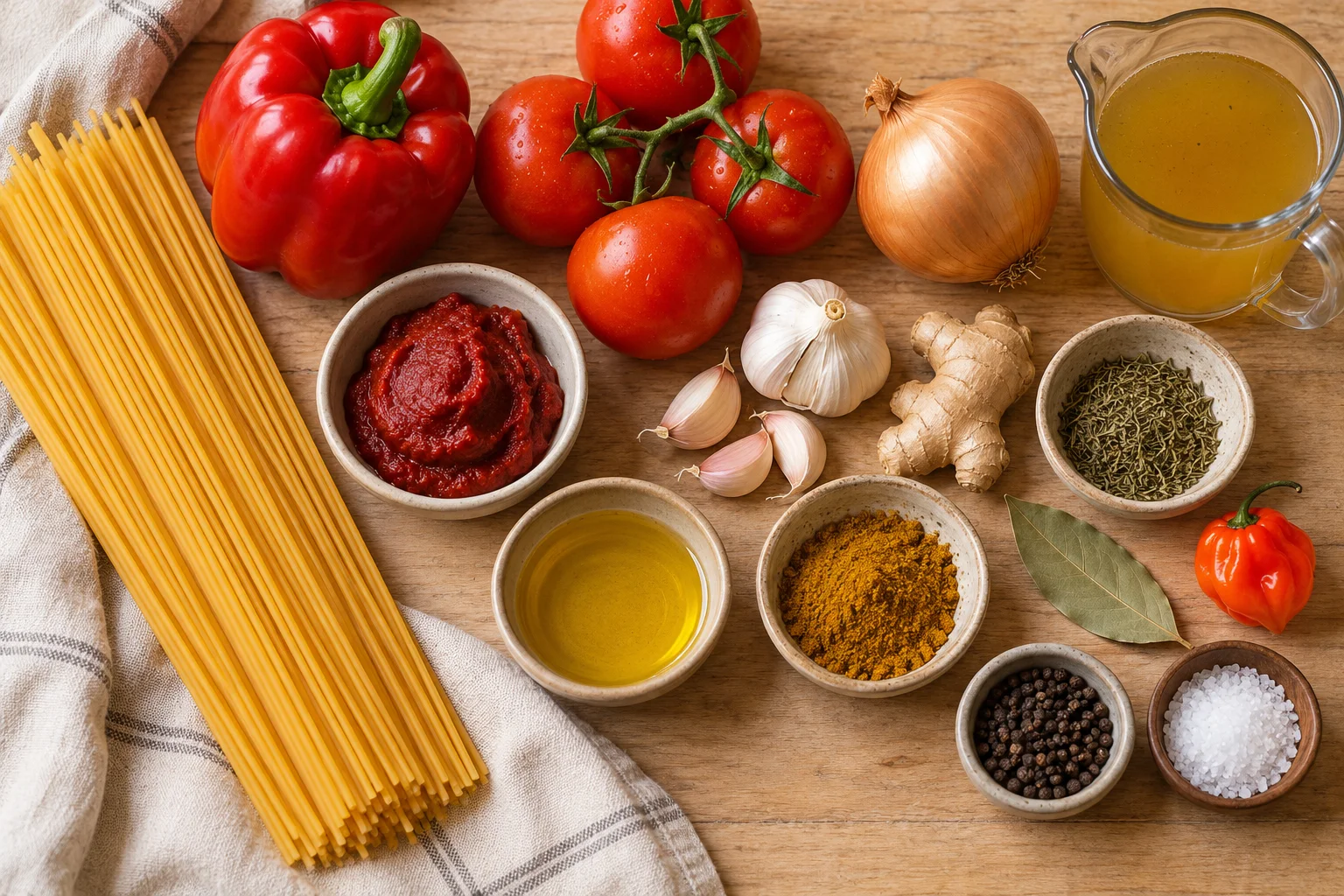
Red bell pepper, tomatoes and onion form the sauce base. Tomato paste adds a concentrated tomato component, while thyme, curry powder, garlic and ginger supply the seasonings used in this adaptation. An optional hot pepper lets you decide how much heat to include.
The sauce should be cooked before you add the spaghetti. Blending vegetables does not remove their raw taste, and simply stirring the blended mixture through cooked pasta will produce a different result. Allow time for the mixture to reduce and for its flavor to develop in the pan.
For context from a Nigerian recipe creator, see Sisi Yemmie’s jollof spaghetti preparation. The quantities and vegetable-only formula below are a separate adaptation, not a reproduction of that recipe.
Recipe
Jollof Spaghetti with Tomato and Pepper Sauce
Jollof spaghetti pairs spaghetti with a seasoned tomato-and-pepper sauce associated with Nigerian home cooking. This adaptation cooks the pasta separately and then tosses it with a reduced sauce. It gives you control over the spaghetti's texture without having to calculate how much liquid raw pasta will absorb in the sauce.
1/2cuplower-sodium vegetable brothwith more only as needed
1/4teaspoonfine saltplus more only after tasting
1/4teaspoonground black pepper
A small piece of Scotch bonnet or other hot pepperoptional and adjusted to preference
1/2cupreserved pasta cooking waterup to this amount; add only as needed
Method
Thinly slice half the onion. Blend the remaining half with the red bell pepper, tomatoes, garlic and optional hot pepper until reasonably smooth. Use the vegetable juices to help the blender; add a spoonful of water only if your machine needs it.
Heat the oil in a wide, deep skillet over medium heat. Add the sliced onion and cook for about 4 minutes, stirring, until softened. Add the ginger and tomato paste and stir for approximately 2 minutes without scorching the paste.
Carefully add the blended tomato-pepper mixture; it may splatter. Stir in the thyme, curry powder, bay leaf, broth, salt and black pepper. Bring to a simmer.
Cook uncovered or partially covered for approximately 20–25 minutes, stirring regularly, until the sauce is reduced and the vegetables no longer taste raw. Lower the heat if the base starts catching. Add a small splash of broth only if it becomes too dry before the vegetables cook.
While the sauce reduces, cook the spaghetti in a separate pot according to its package directions, stopping when it is just tender. Reserve 1/2 cup cooking water before draining.
Remove the bay leaf from the sauce. Taste and adjust the seasoning. Add the spaghetti and toss over low heat for about 1–2 minutes until coated. Add reserved water a tablespoon at a time only if necessary.
Serve promptly. Keep the heat gentle during the final toss so the sauce does not scorch against the bottom of the pan.
Notes
Recipe development draft; quantities, yield and times have not been kitchen-tested by RecipeCrave. Times are estimates. Images are AI-generated illustrations. Nigerian-inspired vegetable adaptation. This method cooks pasta separately. Allow extra sauce reduction time if vegetables are watery.
How to Adjust the Heat
Hot peppers vary in strength. If you are unsure, leave the optional pepper out of the first batch and offer a hot condiment separately. A small amount blended through the sauce affects every serving, so it is worth making that decision before cooking for a group.
Handle hot peppers carefully and wash hands and utensils afterward. Avoid touching your eyes during preparation. The red bell pepper supplies vegetable flavor and color here; it is not being used as a substitute for the heat of Scotch bonnet.
Why Cook the Pasta Separately?
One-pot pasta depends on the pasta shape, pan width, heat and liquid level working together. This separate-pot method removes one of those variables: you cook the spaghetti to the package guidance, then finish it briefly in sauce.
Do not leave fully cooked spaghetti simmering in the sauce for a long time. It can become soft before the sauce reaches the texture you want. Finish reducing the sauce first, and keep the last toss short.
This is one of several pasta meal ideas for a weeknight rotation. For a different sweet-and-spicy chicken option, see RecipeCrave’s Bang Bang Chicken Pasta with Broccoli. The two dishes use different sauces and should not be presented as the same culinary tradition.
Serving and Storing
Serve the spaghetti as written, or alongside a separately prepared protein or vegetable side. Adding meat to the sauce changes the cooking requirements; this recipe does not provide a raw-meat variation or an estimated temperature based only on appearance.
Refrigerate leftovers promptly in shallow containers and use within 3–4 days. Reheat thoroughly to 165°F (74°C), stirring and adding a little water if needed. For general cooling and refrigeration rules, see FoodSafety.gov’s food safety steps.
Frequently Asked Questions
Is jollof spaghetti an Italian dish?
This recipe is Nigerian-inspired and uses a jollof-style tomato and pepper sauce. The use of spaghetti does not make the overall dish a traditional Italian preparation.
Can I make it without a blender?
Finely chop or grate the tomatoes, pepper, onion and garlic, then cook until softened and reduced. The sauce will be more textured, and the cooking time may change. Cut the vegetables small enough to coat the pasta comfortably.
Can I use tomato sauce from a jar?
Prepared spaghetti sauce has its own seasoning and does not replace the red pepper, onion and tomato mixture exactly. For the intended flavor of this draft, use the listed vegetables and tomato paste. Treat a jarred-sauce version as a separate variation.
Can I use a different pasta shape?
Yes. Cook the alternative shape in a separate pot according to its package, using the same dry weight as a starting point. The sauce coating will look different on short pasta, and a different surface area may change how much sauce you prefer.
Elena Arzak Diaz is the voice behind RecipeCrave, sharing easy recipe ideas, cozy bakes and practical kitchen guides. Explore the recipe collections for everyday dinners, cookies, desserts and breakfast inspiration.