

Jump to recipe & serving calculator
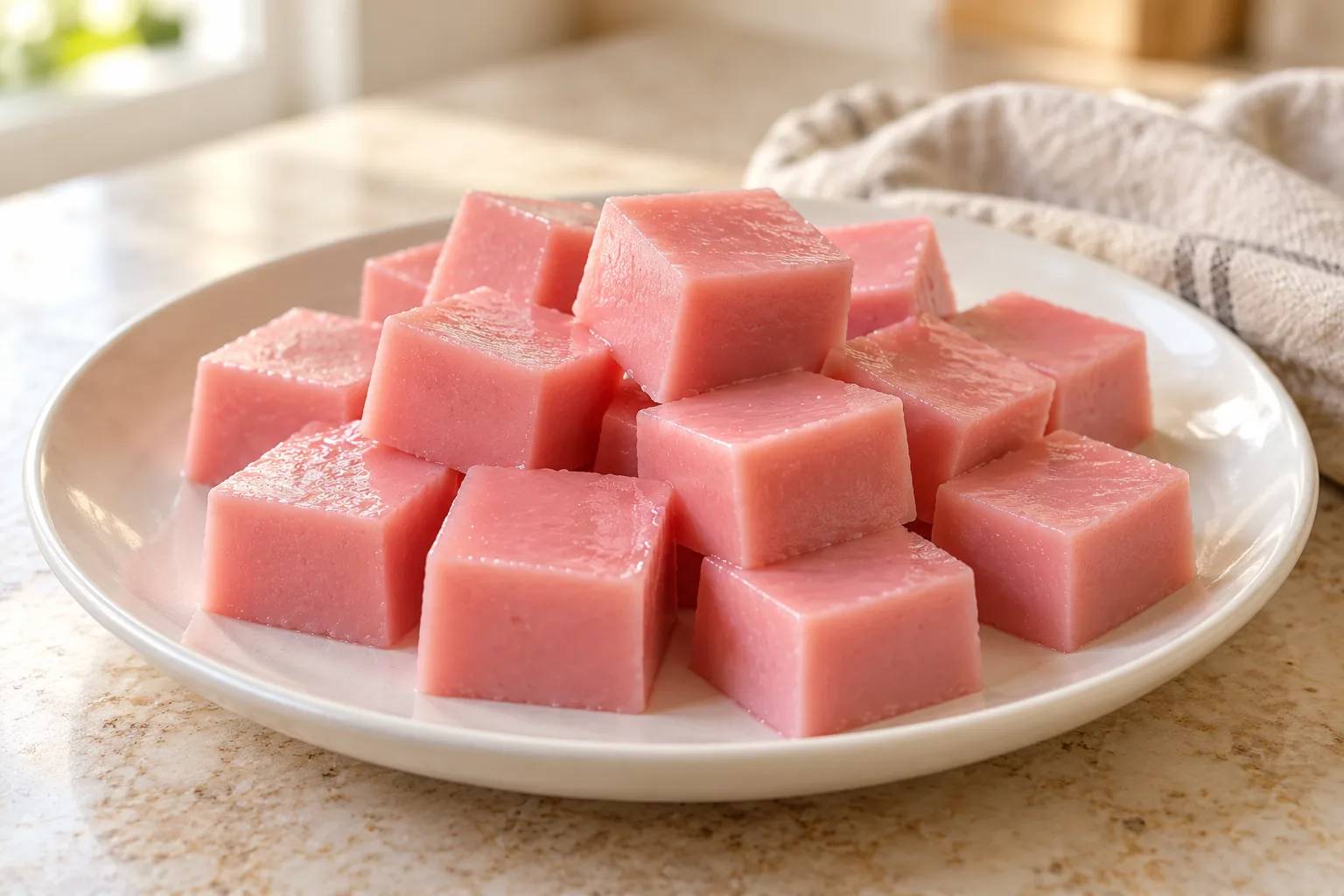
Strawberry protein gelatin cubes are a chilled, no-bake snack made with strawberry gelatin, unflavored gelatin, water and strawberry whey protein powder. Dissolve the gelatin completely, mix the protein powder separately, combine while the gelatin is still fluid, then refrigerate until firm enough to cut. This batch makes 48 small cubes, divided into eight servings of six cubes.
The extra unflavored gelatin gives the mixture enough structure to slice, while the whey powder makes the cubes opaque and creamy pink rather than clear red. The finished texture is a firm gelatin snack, not a chewy, shelf-stable gummy candy.
This recipe is adapted from DaVita’s High Protein Gelatin Power Cubes. The explanations and directions below are written for RecipeCrave. The method includes a separate blooming step for the unflavored gelatin, following Knox’s gelatin preparation guidance. This adaptation has not been kitchen-tested; preparation and chilling times are estimates.
What you need
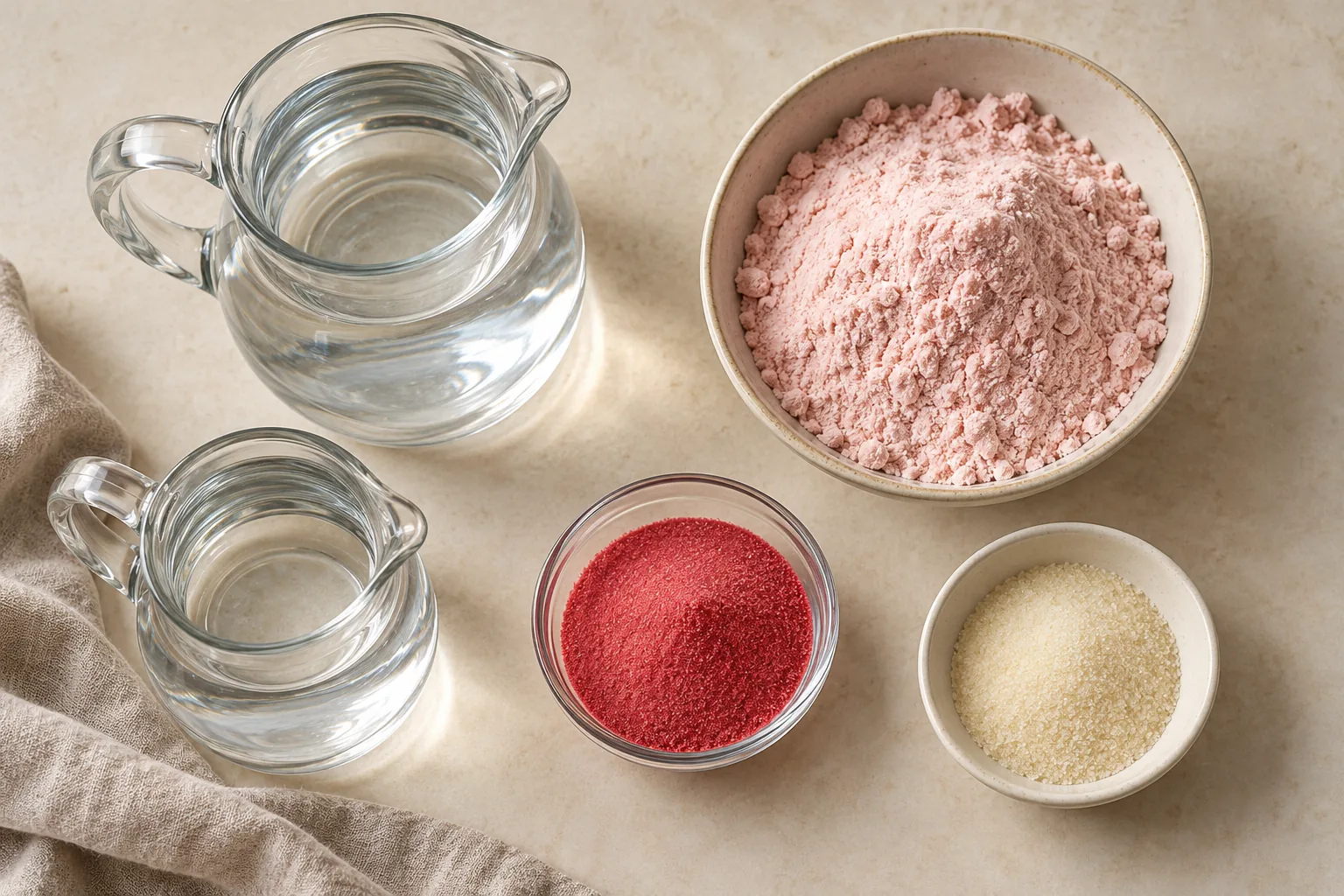
- Strawberry sugar-free gelatin: use three small packets, each intended to make about two cups of prepared gelatin. Packet weights differ between brands. Do not substitute three large family-size packets.
- Unflavored gelatin: four standard envelopes, about 28 grams in total. Use the envelope weight on your package as the reference if your product differs.
- Strawberry whey protein powder: the base recipe uses a volume measure. Weigh that measured amount once and consult its label if you want to estimate nutrition. A scoop is not a universal unit.
- Water: measure the hot and cold portions separately. The cold portion is divided between blooming the unflavored gelatin and mixing the protein powder.
Whey contains milk. This recipe is not vegan because conventional gelatin is animal-derived. Check all package labels for allergens and any dietary requirements relevant to you.
Strawberry Protein Gelatin Cubes
Equipment
- 1 9 × 13-inch glass baking dish plus heatproof bowls, whisk and measuring cups
Ingredients
- 2 cups hot water freshly brought to a boil
- 3 small packets sugar-free strawberry gelatin each making about 2 cups when prepared as directed
- 2 1/4 cups cold water divided
- 4 standard envelopes unflavored gelatin
- 1 2/3 cups strawberry whey protein powder
Instructions
- Set a clean 9 × 13-inch glass baking dish on a level surface. Measure the cold water into two portions: 1 cup for the unflavored gelatin and 1 1/4 cups for the protein powder.
- Pour the 1 cup cold water into a wide heatproof mixing bowl. Sprinkle the unflavored gelatin evenly over the surface. Let it hydrate for about 5 minutes, or follow the blooming directions on your gelatin package. Avoid dumping it into one mound.
- In a separate heatproof container, carefully stir the strawberry gelatin into the 2 cups freshly boiled water. Stir until the flavored powder is fully dissolved, checking the bottom for granules. Keep the container off the heat.
- Pour the hot strawberry mixture over the bloomed unflavored gelatin. Whisk gently until the hydrated gelatin dissolves completely. Do not boil the combined mixture. If needed, use gentle indirect heat just long enough to dissolve remaining gelatin, then remove it from the heat.
- Whisk or shake the whey powder with the remaining 1 1/4 cups cold water until smooth. Use a container that has room for mixing, and never seal hot liquid in a shaker. Let the warm gelatin mixture cool until lukewarm but still liquid. Whisk in a little of it to loosen the protein mixture, then gradually whisk the protein mixture into the gelatin bowl. Work promptly if the mixture starts to thicken.
- Pour into the baking dish and skim off excess surface foam with a spoon. Cover and refrigerate on a level shelf until the entire layer is firm, allowing about 4 hours or longer as needed. Do not cut it while the center is still fluid.
- Cut into a grid of 6 rows by 8 columns to make 48 cubes. Divide into eight servings of six cubes. Keep the cubes refrigerated until serving.
Notes
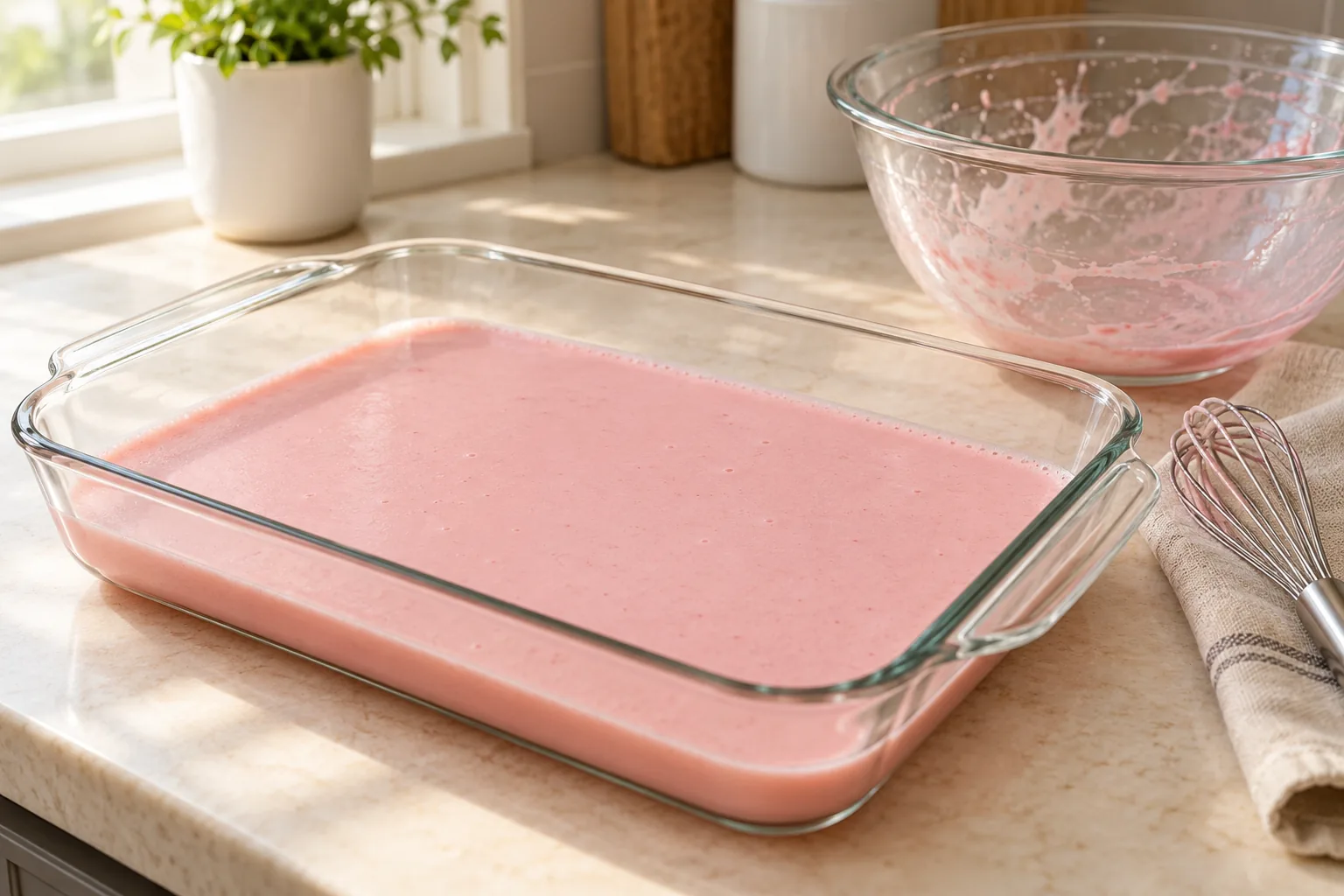 preparation illustration; not documentation of kitchen testing.
How to avoid powdery or lumpy cubes
The three powders do different jobs, so treating them separately helps you see whether each has dissolved or dispersed. Bloom the unflavored gelatin first, dissolve the flavored gelatin in hot water, and mix the whey with cold water before combining them.
Dry whey added directly to hot gelatin can form stubborn clumps. Gelatin granules that were never fully hydrated can also remain visible in the finished cubes. A persistent lump should be resolved before the mixture goes into the dish; chilling will not make a dry pocket disappear.
Stir gently after combining to limit foam. A thin foamy layer is mainly a texture and appearance issue. Let bubbles settle briefly while the mixture is still pourable, or skim the surface rather than beating in more air.
Why your cubes might stay soft
First check the package sizes and water measurements. Flavored gelatin comes in different packet sizes, and replacing a small packet with a family-size packet changes the formula. Leaving out the unflavored gelatin also changes the structure.
Next, give the mixture more chilling time before assuming it failed. Refrigerator temperature, dish depth and the starting temperature of the mixture affect how quickly the center sets. Different protein powders can change thickness and texture; this recipe has not been tested with every whey blend.
Avoid adding extra fruit, juice or other liquids to this base without testing a separate small batch. Those additions change more than the flavor. If you want a softer spoonable dessert, serve it in cups rather than expecting the same mixture to cut into neat cubes.
Protein and nutrition: use your package labels
There is no single reliable protein number for every version of this recipe. Whey powders differ in scoop weight, protein concentration and other ingredients. Gelatin and flavored mixes also differ between products.
To estimate protein per serving, weigh the quantity of whey powder you actually used. Divide that weight by the label’s serving weight and multiply by its protein grams per serving. Add the protein contributed by the other ingredients, using their labels, then divide the batch total by eight. For protein per cube, divide the batch total by 48. Use the same approach for calories and other nutrients.
These are label-based estimates, not laboratory analysis. No nutrition values have been calculated for this RecipeCrave adaptation. DaVita’s figures refer to its own version and should not be transferred automatically to different products. If you follow a prescribed kidney diet, review the ingredient choices and portion with your renal dietitian; protein and phosphate additives vary by brand.
Storage and serving
Store the cubes covered in the refrigerator. As a cautious home-preparation guideline, make only what you expect to eat within 3–4 days, and follow any shorter storage guidance on your ingredients. This adaptation has not undergone shelf-life testing. Use clean utensils and keep the dish covered to protect its surface and prevent it from picking up refrigerator odors.
Serve chilled. These cubes are not designed as room-temperature travel snacks. Freezing may change the texture after thawing, so refrigeration is the starting recommendation for this untested adaptation.
Frequently asked questions
Can I use vanilla whey instead of strawberry?
It will change the flavor and may change the color. The strawberry gelatin will still contribute flavor, but the result has not been tested here. Check the powder’s mixing instructions and keep the water measurements consistent for an initial trial.
Can collagen powder replace the unflavored gelatin?
No direct substitution is intended. Hydrolyzed collagen peptides do not provide the same setting action as gelatin. Keep the unflavored gelatin in this recipe if you want a sliceable result.
Can I replace whey with a plant-based protein powder?
That substitution needs separate testing. Plant-based powders can absorb liquid and leave a different texture. The recipe would still contain animal-derived gelatin unless that ingredient were also reformulated.
Can I double the recipe?
Use the serving calculator to scale the ingredients, then divide the mixture between two 9 × 13-inch dishes. A deeper layer changes the chilling and cutting behavior. The calculator scales quantities; it does not establish a new chilling time.
Are these the same as gelatin gummies?
No. They are refrigerated protein gelatin cubes with a soft, firm-set texture. They are not formulated as chewy candy or a shelf-stable supplement.
For more snack ideas, browse RecipeCrave’s Appetizers & Snacks collection.

Pingback: Protein Jello Mousse with Greek Yogurt (Easy Recipe)
Pingback: Cranberry Gelatin Recipe: Mixing Tips and Variations